
Balers for Recycling
Balers for Recycling: The Smart Investment for Efficient Waste Management
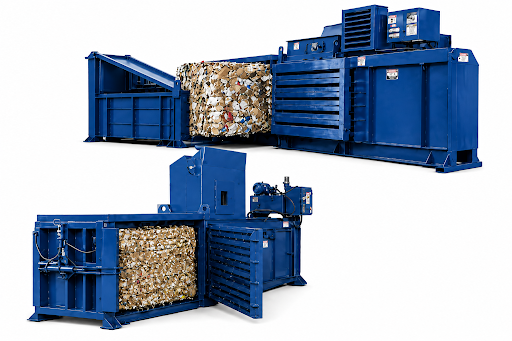
Every business that generates cardboard, plastic, paper, or metal waste eventually runs into the same problem: where does it all go? Loose recyclables pile up fast, eat into valuable floor space, and turn hauling costs into a growing line item on the budget. That's exactly the problem that balers for recycling were built to solve.
At The Mark-Costello Co., we've spent decades helping businesses across retail, manufacturing, healthcare, and distribution take control of their waste streams. Whether you're running a single retail stockroom or a 24/7 industrial facility, the right baler doesn't just compress trash; it transforms recycling from a daily headache into a streamlined, even profitable, part of your operation. Below, we break down everything you need to know about choosing, using, and maintaining balers for recycling in your facility.
What Balers for Recycling Actually Do
At their core, balers are hydraulically or pneumatically powered machines that compress loose or bulky recyclable materials: cardboard, plastic film, paper, rags, aluminum cans, and more-into dense, uniform bales. Instead of overflowing dumpsters and constant hauling pickups, your team feeds material into the baler's chamber, the machine's platen applies heavy compression force, and the finished bale is tied off with wire or strapping before being ejected for storage or pickup.
This process does more than tidy up a stockroom. It fundamentally changes how a facility manages waste:
Volume reduction: A baler can shrink loose recyclable material down to a fraction of its original size, meaning fewer trips to the dumpster and far less wasted floor space.
Consistent, safe handling: Because the compression and tie-off process is standardized, there's less risk of materials shifting, spilling, or creating tripping and fire hazards.
Revenue potential: Baled cardboard, in particular, often has resale value to recyclers, turning what used to be a disposal cost into a modest revenue stream.
For businesses generating meaningful volumes of recyclable waste, this is the difference between reactive cleanup and a genuinely efficient recycling system.
Vertical vs. Horizontal Balers: Choosing the Right Fit
Not every operation needs the same type of machine, and one of the most important decisions a business makes is choosing between a vertical or horizontal baler.
Vertical balers are compact, top-loading machines well suited to businesses with moderate waste volumes and limited space, such as retail stockrooms, small warehouses, grocery stores, and light manufacturing operations. Material is loaded from the top, compressed downward, and formed into a bale that's typically removed manually or with basic tools. Vertical balers come in a range of sizes, from compact stockroom units designed to tuck into tight back-of-house spaces up to heavy-duty models capable of handling higher-volume operations.
Horizontal balers, by contrast, are built for high-throughput environments, large distribution centers, manufacturing plants, and facilities running around the clock. Material is typically fed continuously via a conveyor or chute system, and the baler automatically compresses and ties off bales without requiring an operator to stop and reload for every cycle. Many horizontal systems can be integrated with shredders and conveyor lines to handle massive waste volumes with minimal manual labor.
When deciding which type of baler for recycling makes sense for your business, a few questions matter most:
How much recyclable material do you generate daily or weekly?
Do you have the floor space and ceiling height for a larger horizontal system, or does a compact vertical unit make more sense?
Is your waste generation continuous (like a 24/7 manufacturing line) or more intermittent (like a retail stockroom)?
What's your budget, both for the equipment itself and for ongoing maintenance?
Getting this decision right up front saves businesses from the two most common baler mistakes: buying a machine too small to keep up with demand or overspending on capacity they'll never use.
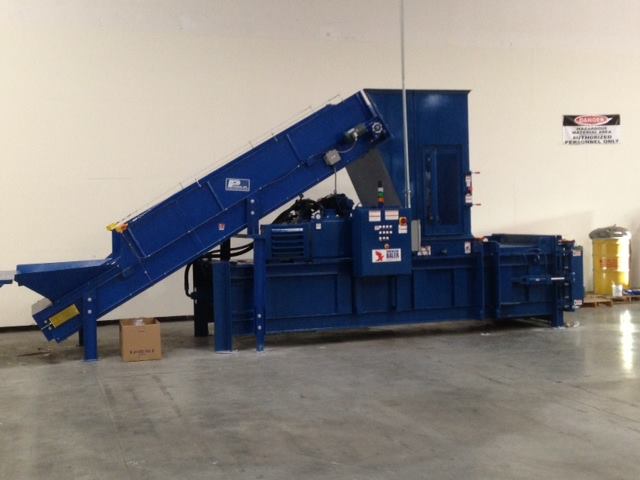
From an operational standpoint:
- Waste is generated and temporarily stored in bins or carts.
- Periodically, it is loaded into the compactor hopper.
- The compactor is activated (manually or automatically).
- Waste is compressed, and the container or bale is sealed.
- The compacted bundle is transported or disposed of, requiring fewer pickups.
- The cycle repeats, and your facility experiences fewer interruptions, less accumulation of loose waste, and reduced labour and transport costs.
Why Choose Us
Decades of Experience
Mark Costello has been a trusted name in waste management for decades, delivering reliable and effective solutions that businesses count on.
Cutting-Edge Technology
Using the latest technology, We ensures that waste management systems are efficient and up to industry standards, from food digesters to compactors.
Customized Solutions
At Mark Costello,we provides tailored waste management solutions that fit each business’s unique needs, ensuring a smooth integration into existing operations.
Focused on Sustainability
Mark Costello is dedicated to helping businesses achieve their sustainability goals by turning waste into valuable resources, supporting a greener future.
Materials, Applications, and Industry Use Cases
Balers for recycling aren't just for cardboard, though that's often the highest-volume material in retail and warehouse settings.
Depending on the model and configuration, balers can handle:
Corrugated cardboard, the most common material processed, especially in retail and distribution
Plastic film and shrink wrap, common in warehouses and manufacturing
Paper and office waste are useful for administrative and institutional facilities
Aluminum and steel cans, relevant for food service and beverage operations
Textiles and rags used in manufacturing and industrial settings
Mixed recyclables, for facilities consolidating multiple material streams
Different industries lean on balers in different ways. A retail chain might use a compact stockroom baler to manage daily cardboard from restocking, freeing up backroom space and creating a modest revenue stream from baled material sales. A distribution center might pair a horizontal baler with a conveyor and shredder system to process continuous waste from a high-speed operation. A hospital or school district might rely on a mix of compactors and balers to manage everything from packaging waste to general recyclables across a large campus.
This versatility is one of the biggest reasons balers for recycling have become standard equipment across so many industries; the underlying technology adapts to wildly different volumes, materials, and workflows.
Buying the right baler is only half the equation; how it's operated and maintained determines whether it delivers value for years or becomes a maintenance headache.
Operator training matters. Balers are powerful machines, and while modern units include safety features like interlock systems, emergency stops, and keyed access controls, proper training is still essential. Staff should understand loading procedures, how to recognize a completed bale cycle, and what to do in the event of a jam or malfunction.
Match the machine to your volume, and plan for growth. A baler that's undersized will bottleneck your waste stream and wear out faster from overuse. One that's oversized ties up capital and floor space unnecessarily. It's worth having an honest conversation about not just your current volume, but where your business is headed over the next few years.
Think through your logistics, not just the equipment. A baler is only as useful as the system around it. That means confirming your recycling hauler can pick up and process baled material, setting a pickup schedule that matches your bale production rate, and having a plan for storing finished bales until pickup.
Don't skip maintenance. Like any hydraulic equipment, balers need regular servicing, checking hydraulic fluid levels, inspecting wear points, and keeping safety systems in good working order. A well-maintained baler with responsive service support runs for years with minimal downtime; a neglected one becomes an expensive liability.
This is where working with an established equipment provider makes a real difference.
The Mark-Costello Co. has been solving waste and recycling challenges for businesses since 1956, and our team doesn't just sell balers; we help customers select the right size and configuration, provide ongoing service and parts support, and stand behind the equipment long after installation.
Whatever your industry or volume, we have a solution built to match your operation.
Send Us a Message
Send us a message with your questions or concerns and our team member will contact you. We’d love to hear from you.
Client Testimonials
It’s been a great relationship with The Mark-Costello Company; they are very dependable to all of our waste handling requirements and have made us aware of the importance of recycling and the upcoming waste handling issues in the future.
Thank you for your services to our company. Your teamwork has been very attentive and diligent in the way it has been carried out. We are very pleased with the teamwork, the price and the quality of your services. We expect to continue an excellent business relationship with you in the near future.
The Model we operate is a AS 512 equipped with a unique “pull out drawer” making it easy for the Housekeeping Staff to load. This unit has a capacity of approximately 750 lbs. per cycle. We expect to keep our Mark-Costello autoclave in operation for another 8 years or longer!
Frequently Asked Questions
Here are answers to some of the most common questions we receive about commercial garbage compactor provided by The Mark-Costello Co.
What are balers for recycling used for?
Balers for recycling are used to compress loose or bulky recyclable materials like cardboard, plastic, paper, and cans into dense, secured bales. This reduces waste volume, frees up storage space, lowers hauling costs, and makes it easier to sell or transport recyclable materials.
How do I choose the right size baler for my business?
The right size depends on how much recyclable material your facility generates and how frequently. Businesses with lower or moderate volumes, like retail stockrooms, typically do well with a compact vertical baler, while high-volume operations like distribution centers or manufacturing plants often need a larger horizontal baler system. A waste equipment specialist can help assess your volume and recommend the right fit.
Can balers for recycling actually generate revenue for my business?
In many cases, yes. Baled cardboard and certain other recyclable materials often have resale value to recycling processors. While the amount varies by material type, market conditions, and local recyclers, baling can turn what was once a pure disposal cost into a modest income stream.
What's the difference between a vertical and horizontal baler?
Vertical balers are compact, top-loading machines suited to smaller spaces and moderate waste volumes. Horizontal balers are designed for continuous, high-volume operations and are often fed automatically via conveyors or chutes, making them a better fit for large industrial or distribution facilities.
How often do balers for recycling need maintenance?
Balers require regular maintenance to stay reliable, including routine checks of hydraulic systems, safety interlocks, and wear components. The exact schedule depends on usage volume and the specific model, but partnering with a provider that offers ongoing service and support, like The Mark-Costello Co., helps minimize downtime and extend the equipment's lifespan.