
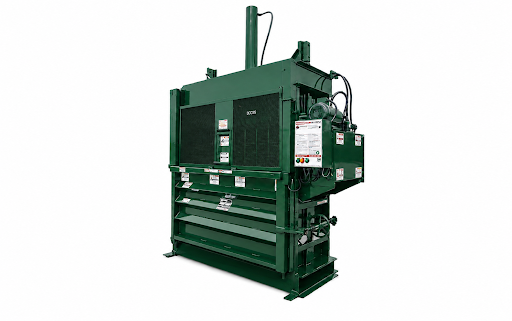
Some version of the same problem. Boxes pile up faster than anyone can keep track of, cardboard spills out of overflowing bins, and someone eventually has to spend part of their shift breaking down and hauling that material out to a dumpster that is already too full. It is a daily headache that eats up labor time, wastes valuable floor space, and often results in perfectly recyclable cardboard getting tossed in with general waste simply because there was nowhere else to put it.
A heavy-duty vertical baler changes that equation directly. By compressing loose cardboard into dense, tightly bound bales, a vertical baler dramatically reduces the physical volume that cardboard waste takes up, freeing up space, cutting down on hauling frequency, and turning what used to be a disposal cost into a material with real recycling value.
What a Heavy Duty Vertical Baler Does
A vertical baler works by feeding loose cardboard, or other compressible material like plastic film or mixed paper, into a vertical chamber where a hydraulic ram compresses it from above. As material is added and compacted in successive cycles, it forms a dense, uniform bale that is then tied off and ejected from the machine, ready for storage or pickup. The vertical orientation of the machine is what gives it its name, and it is also what makes these units well suited for facilities with limited floor space, since the compaction chamber occupies a relatively small footprint compared to the volume of material it can process.
This is different from a horizontal baler, which feeds material through a horizontal chamber and is generally built for higher volume, more continuous operation. Horizontal balers tend to be larger machines suited to facilities generating a constant, high volume stream of cardboard or other baled material, while vertical balers are typically a better fit for operations with moderate, steady cardboard generation and limited space to dedicate to baling equipment. Retail stores, smaller distribution operations, and light manufacturing facilities often find that a vertical baler hits the right balance of capacity and footprint for their specific needs.
Vertical balers also tend to be simpler to operate on a day to day basis, since staff typically load material by hand into the top of the chamber rather than managing a continuous feed system. That makes them a practical choice for operations where cardboard handling is one task among many for a given employee, rather than a dedicated full time role the way it might be at a much higher volume facility running a horizontal system around the clock.
The Real Cost of Uncompacted Cardboard
Loose, uncompacted cardboard is deceptively bulky. A handful of broken down boxes can fill a dumpster far faster than their actual weight would suggest, simply because flattened cardboard still takes up a lot of air space when it is not compressed. That means a facility generating a moderate amount of cardboard waste can still end up needing frequent pickups, not because there is genuinely that much material by weight, but because the loose volume fills available container space so quickly.
This translates directly into wasted floor space as well. Cardboard that has not been baled tends to accumulate in whatever space is available, whether that is a back room, a loading dock corner, or a hallway that was never meant to double as storage. That accumulated cardboard represents lost usable space in a facility, space that could otherwise be used for inventory, equipment, or simply keeping a work area clear and safe to move through.
There is also a missed opportunity cost tied to how loose cardboard gets handled. Clean, dry cardboard, known in the recycling industry as old corrugated containers or OCC, has real resale value when it is properly baled and prepared for a recycler. Cardboard that gets mixed in with general waste because there was no good way to store or process it loses that value entirely, turning a potential revenue stream into just another disposal expense.
Safety is worth mentioning here as well. Loose cardboard piled up in walkways, near exits, or stacked precariously in a back room creates a genuine tripping and fire hazard, particularly in facilities that also store other combustible materials nearby. Facility managers dealing with frequent safety walkthroughs or insurance inspections often find that an organized baling process, with material moving quickly from loose boxes to tied bales, resolves a recurring item on their safety checklist without much additional effort once the equipment and workflow are in place.
How Vertical Balers Cut Volume and Space
The compaction ratio a vertical baler achieves is the core of its value proposition. By compressing cardboard into dense, uniform bales, a vertical baler can reduce the physical volume of the same amount of material by a significant margin compared to its loose, uncompacted state. That means far fewer trips to the dumpster, since the cardboard that used to fill an entire container in its loose form now fits into a fraction of that space once baled.
The compact footprint of a vertical baler itself is just as important as what it does to the material passing through it. Because the machine operates in a vertical chamber rather than a horizontal one, it can be installed in tighter spaces than a horizontal baler would require, which matters significantly for retail backrooms, loading docks, and other spaces where square footage is always at a premium. A facility does not need to sacrifice a large section of valuable floor space just to gain the benefits of baling.
Bales produced by a vertical baler are also much easier to store and stage for pickup compared to loose cardboard. A stack of uniform, tied bales takes up a predictable, compact footprint and stays put until it is time for pickup, rather than spilling, shifting, or creating the kind of mess that loose cardboard tends to generate over the course of a busy day.
This predictability extends to hauling logistics as well. A hauler or recycler picking up baled material knows exactly what they are collecting and can plan transport accordingly, whereas loose cardboard often requires additional handling time just to load it for transport in the first place. Facilities that switch from loose cardboard disposal to baled pickup frequently find that the pickup process itself becomes faster and less disruptive to daily operations, since there is no loading delay caused by loose, awkwardly shaped material.
Turning Waste Into Revenue
One of the more overlooked benefits of baling cardboard is what it does for a facility’s relationship with recyclers. Baled OCC is far more attractive to recycling buyers than loose, mixed cardboard, both because it is easier to transport and because a clean, well formed bale signals consistent quality. Facilities that bale their cardboard properly are often able to sell that material to recyclers, turning what used to be a pure disposal cost into a modest but meaningful revenue stream.
The condition of the bale matters quite a bit here. Clean, dry cardboard that has been properly sorted from contaminants like food residue, plastic, or other mixed waste commands a better price and finds buyers more easily than cardboard that has been carelessly compacted alongside other materials. Facilities that take the time to keep their cardboard stream clean before it goes into the baler tend to see a meaningfully better return when it comes time to sell those bales.
Even for facilities that do not treat cardboard recycling revenue as a significant part of their bottom line, the simple act of diverting cardboard away from general waste disposal reduces overall waste hauling costs, since baled cardboard headed for recycling is typically far cheaper to move than the same material mixed into a general waste stream and charged at standard disposal rates.
Building a relationship with a local recycler also tends to pay off in ways beyond the per bale price. Recyclers who know they can count on a steady supply of clean, well-formed bales from a particular facility are often more flexible on pickup scheduling and more willing to work with that facility on pricing over time. That kind of ongoing relationship is much easier to build once a facility has a consistent baling process in place, rather than showing up with an inconsistent, occasionally contaminated batch of material every few months.
Who Benefits Most from a Vertical Baler
Retail stores are a natural fit for vertical balers, given the steady stream of shipping boxes that come with regular inventory deliveries. A single store might not generate enough cardboard to justify a large horizontal baler, but a vertical unit sized appropriately for that volume can handle the daily flow without demanding more space than a backroom can reasonably spare.
Distribution centers and warehouses handling moderate cardboard volume, as opposed to the extremely high volume operations that typically call for horizontal balers, also find vertical units to be a strong fit. Grocery stores dealing with a steady stream of produce and packaged goods boxes, along with light manufacturing facilities that receive components and materials in cardboard packaging, round out the list of operations where a heavy duty vertical baler tends to deliver the clearest value.
The common thread across all of these examples is a business generating a real, ongoing volume of cardboard waste, but not necessarily at the scale that would justify the larger footprint and higher throughput of a horizontal system. For that middle tier of cardboard generation, a heavy-duty vertical baler tends to be the more practical, cost-effective choice.
It is also worth noting that many of these operations run more than one type of compressible waste through their backroom or dock area, not just cardboard. Plastic film, shrink wrap, and mixed paper often show up alongside cardboard in a typical retail or distribution setting, and a heavy-duty vertical baler capable of handling multiple material types gives a facility more flexibility than a unit built to process cardboard alone. Facilities that expect to bale more than just cardboard down the line should factor that into their equipment decision from the start, rather than needing to add a second machine later.
Choosing the Right Vertical Baler for Your Operation
Not every vertical baler is built the same way, and choosing the right model depends heavily on a facility’s actual cardboard volume and the physical space available for the machine itself. A unit that is undersized for a facility’s true volume will need to be run more frequently, which can eat into the labor savings a baler is supposed to provide in the first place. On the other hand, a unit that is oversized for a facility’s needs simply takes up more space than necessary without adding meaningful value.
Working through an honest assessment of daily or weekly cardboard volume before selecting a machine tends to be the most reliable way to land on the right size. Facilities that skip this step and simply choose a baler based on what fits in the available space, rather than what fits the actual volume of material passing through the facility, often end up disappointed with performance down the line.
Maintenance requirements are also worth factoring into the decision. A heavy-duty vertical baler built for daily commercial use should hold up to consistent operation without frequent breakdowns, but any hydraulic equipment benefits from a basic maintenance routine, including regular checks of the hydraulic fluid, the tie-off mechanism, and the safety interlocks that keep the machine safe to operate. Choosing a unit from a manufacturer that stands behind its equipment with reliable parts and service support tends to matter just as much as the specifications on paper.
Bringing It All Together
Cardboard waste is one of those problems that seems minor on any given day but adds up to a real operational and financial burden over time. A heavy-duty vertical baler addresses that problem directly, reducing the physical volume of cardboard waste, freeing up valuable floor space, cutting hauling frequency, and in many cases turning what used to be pure disposal cost into a source of recycling revenue. For retail stores, distribution centers, and light manufacturing facilities generating a steady but moderate volume of cardboard, a vertical baler offers a practical, space-efficient way to get that material under control.
How Mark Costello Can Help
Mark Costello’s Marathon StockRoom vertical baler and broader vertical baler lineup are built for exactly this kind of heavy duty, daily use application, giving facilities a reliable way to compact cardboard without demanding a large equipment footprint. For operations that outgrow a vertical unit or generate consistently higher cardboard volume, our space-saving side-eject horizontal balers offer another path forward, and our team can walk through the tradeoffs between side eject and conventional end-eject designs to find the right fit. If your facility is dealing with overflowing cardboard, wasted backroom space, or missed recycling revenue, reach out to Mark Costello today to schedule a sizing consultation and find the baler that matches your actual volume and space.
Frequently Asked Questions
How much can a vertical baler reduce cardboard volume?
A vertical baler significantly reduces the physical volume of loose cardboard by compressing it into dense, uniform bales, meaning the same amount of material by weight takes up a fraction of the space it would occupy loose. The exact reduction depends on the type and condition of the cardboard being baled, but most facilities see a dramatic difference in how much space their cardboard waste occupies once baling is introduced.
What’s the difference between a vertical and horizontal baler?
A vertical baler compresses material in a vertical chamber and generally has a smaller footprint, making it well suited for facilities with moderate cardboard volume and limited space. A horizontal baler feeds material through a horizontal chamber and is typically built for higher volume, more continuous operation, which usually requires a larger dedicated space.
Can baled cardboard be sold for recycling revenue?
Yes, clean, properly baled cardboard, known as OCC in the recycling industry, generally has resale value to recyclers. The condition and cleanliness of the bale affects how easily it finds a buyer and what price it commands, which is why keeping cardboard free of contaminants before baling tends to pay off.
What size vertical baler is right for a retail backroom?
The right size depends on how much cardboard a store generates on a typical day or week, along with how much floor space is realistically available in the backroom. A straightforward assessment of current cardboard volume is the most reliable way to choose a unit that is neither undersized nor larger than necessary for the space.
How much floor space does a heavy-duty vertical baler need?
Vertical balers are designed with a compact footprint compared to horizontal units, which is part of why they work well in tighter spaces like retail backrooms and loading dock areas. The exact footprint varies by model and capacity, so reviewing the specific dimensions of a unit against the available installation space is an important step before making a final decision.

Michael Kelleher is an experienced content strategist at The Mark-Costello Co, with over five years of expertise in creating compelling, data-driven content for diverse industries. His focus on delivering high-quality blog posts and content strategies has helped businesses elevate their online presence and connect with their target audience effectively.