
Trash Compactor Commercial
Trash Compactor Commercial Use: Smarter Waste Handling for Busy Businesses
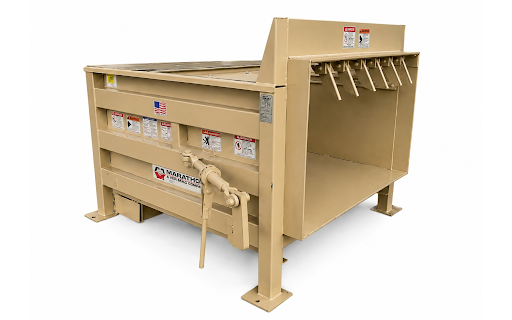
Trash compactor commercial use is one of the most practical ways for a business to lower hauling costs, reclaim floor space, and keep waste areas clean and safe. Restaurants, warehouses, hospitals, retail centers, and manufacturers all produce more waste than loose dumpsters can handle efficiently. A compactor presses that waste into a dense, manageable load, so you make fewer pickups and spend less on disposal. For more than 65 years, The Mark Costello Co. has helped organizations choose, install, and maintain waste equipment that fits how they actually operate.
How Commercial Compactors Cut Costs and Reclaim Space
Every business pays for waste in some way. Some pay through frequent hauler visits, some through overflowing dumpsters, and some through staff time spent managing loose trash. A compactor addresses all three by compressing waste at the source. A container that once held a few days of loose trash can hold far more material once it is compacted. That means fewer pickups, fewer truck trips, and a lower monthly bill.
Space is the second major benefit. Many sites run several dumpsters just to keep up with daily volume. Replacing them with one compactor frees up valuable ground space for parking, deliveries, or landscaping. It also tidies up the property, which matters for customer-facing locations where appearance affects reputation.
Cleanliness and safety improve as well. A closed compactor keeps waste contained, which reduces odors, pests, windblown litter, and the liquids that leak from overfilled bins. Fewer overflowing containers mean fewer slip hazards and less exposure for your team. These practical gains are why trash compactor commercial use keeps growing in food service, healthcare, logistics, and multifamily properties.
Types of Compactors for Different Commercial Needs
No single compactor suits every business. The right choice depends on the type of waste, the volume, and the space you have available. Our compactor equipment page covers the full range, but these are the main categories most businesses consider.
Stationary compactors are permanently installed and connected to a separate, detachable container. They suit high-volume sites such as distribution centers, large retail stores, and manufacturing plants. The hauler swaps the full container for an empty one, so your operation never stops.
Self-contained compactors combine the compaction unit and the container in one sealed system. They are a strong fit for restaurants, grocery stores, and hotels that deal with wet or odorous waste, because the leak-resistant design keeps liquids inside.
Vertical compactors have a small footprint and work well where space is tight. Apartment buildings, small retailers, and light-industry facilities often choose them because they handle moderate volume without taking over a loading area.
Specialty and indoor units serve settings with particular requirements, such as healthcare facilities and food processors, where waste has to be handled cleanly and out of sight. If your site generates regulated or infectious waste, a standard compactor is not the right tool. Our medical waste sterilizers treat that waste safely before it enters the normal waste stream.
From an operational standpoint:
- Waste is generated and temporarily stored in bins or carts.
- Periodically, it is loaded into the compactor hopper.
- The compactor is activated (manually or automatically).
- Waste is compressed, and the container or bale is sealed.
- The compacted bundle is transported or disposed of, requiring fewer pickups.
- The cycle repeats, and your facility experiences fewer interruptions, less accumulation of loose waste, and reduced labour and transport costs.
Why Choose Us
Decades of Experience
Mark Costello has been a trusted name in waste management for decades, delivering reliable and effective solutions that businesses count on.
Cutting-Edge Technology
Using the latest technology, We ensures that waste management systems are efficient and up to industry standards, from food digesters to compactors.
Customized Solutions
At Mark Costello,we provides tailored waste management solutions that fit each business’s unique needs, ensuring a smooth integration into existing operations.
Focused on Sustainability
Mark Costello is dedicated to helping businesses achieve their sustainability goals by turning waste into valuable resources, supporting a greener future.
How to Choose the Right Compactor for Your Business
Choosing well comes down to a handful of questions. Answering them honestly before you buy saves money and avoids equipment that is too small, too large, or the wrong type.
What kind of waste do you produce?
General trash, cardboard, food waste, and mixed refuse all behave differently under compaction. Wet waste calls for a sealed, leak-proof design, while dry packaging waste can go into a standard stationary unit.
How much do you produce, and how often is it hauled?
Track your current dumpster size and pickup schedule for a few weeks. Your hauling frequency is the clearest signal of how much a compactor could save you. A site with daily pickups usually has the most to gain.
What space and utilities do you have?
Measure the installation area, check overhead clearance, and confirm that a truck can reach the container. Compactors also need a suitable power supply, so electrical requirements should be reviewed early.
What is the best way to pay for it?
Not every business wants to purchase equipment outright. Depending on your budget and how long you need the equipment, you can explore buying, leasing, or renting a unit. Leasing and renting can lower upfront costs and keep cash available for other priorities, while buying makes sense for long-term, high-volume operations.
What do local rules require?
Zoning, fire codes, and hauler policies can affect where and how a compactor may be installed. Confirming these early prevents delays after delivery. A knowledgeable equipment partner can walk you through each of these points so that trash compactor commercial use delivers the savings you expect from day one.
Installation, Service, and Long-Term Support
A compactor is a working asset, and it performs best when it is installed correctly and maintained on a schedule. Our team can help you plan the layout, coordinate delivery, and make sure the unit is set up safely. With more than 10,000 installations across 24 countries, we have seen almost every site condition, from cramped urban loading docks to sprawling industrial campuses.
Routine care matters. Hydraulic systems, safety interlocks, and moving components wear over time, and small problems become expensive repairs when they are ignored. Regular inspections, timely repairs, and quality replacement components keep downtime low. Our support and parts page explains how to get the service and components your equipment needs, so a minor issue does not turn into a disruption to your daily operation.
Training is another part of long-term success. Employees should know how to load the unit properly, what materials are not allowed, and how to follow safety procedures. Good habits protect your team and extend the life of the equipment. If you also want to simplify cleanup around the unit, our carts and accessories can help move waste to the compactor more efficiently.
Send Us a Message
Send us a message with your questions or concerns and our team member will contact you. We’d love to hear from you.
Client Testimonials
It’s been a great relationship with The Mark-Costello Company; they are very dependable to all of our waste handling requirements and have made us aware of the importance of recycling and the upcoming waste handling issues in the future.
Thank you for your services to our company. Your teamwork has been very attentive and diligent in the way it has been carried out. We are very pleased with the teamwork, the price and the quality of your services. We expect to continue an excellent business relationship with you in the near future.
The Model we operate is a AS 512 equipped with a unique “pull out drawer” making it easy for the Housekeeping Staff to load. This unit has a capacity of approximately 750 lbs. per cycle. We expect to keep our Mark-Costello autoclave in operation for another 8 years or longer!
Frequently Asked Questions
Here are answers to some of the most common questions we receive about commercial garbage compactor provided by The Mark-Costello Co.
What types of conveyors do you offer for waste and recycling?
We supply heavy-duty steel apron and economy steelbelt conveyors, sliderbed conveyors with magnetic separation, and complete MRF sorting lines. Each is selected based on the material, volume, and equipment it will feed.
How much can a compactor reduce my hauling costs?
Savings depend on your waste type, volume, and current pickup schedule. Because compacted waste fills a container more densely, most sites need fewer pickups than they did with open dumpsters. A review of your hauling invoices is the best way to estimate your own potential savings.
How much noise does a plastic granulator produce during operation?
Granulators can be loud, especially high-capacity units. However, our machines are designed with sound-insulated housings and vibration-reduction features. Optional enclosures and silencers are available for noise-sensitive environments.
What is the difference between stationary and self-contained compactors?
A stationary compactor is connected to a separate container that a hauler takes away and replaces. A self-contained unit has the compactor and container built together as one sealed system, which is better suited to wet or odorous waste. Trash compactor commercial use often involves both, depending on the site.
Should I buy, lease, or rent a commercial compactor?
It depends on your budget, timeline, and volume. Buying suits long-term, high-volume operations. Leasing or renting reduces upfront cost and offers flexibility for seasonal or temporary needs. You can review the options on our buy, lease, or rent page.
What maintenance does a commercial compactor need?
Plan on regular inspections of hydraulics, safety devices, and moving parts, along with timely repairs and keeping the unit clean. Following the manufacturer’s guidance and using quality replacement parts helps prevent breakdowns and extends equipment life.