
Vertical Cardboard Balers
Vertical Cardboard Balers: The Complete Guide for Businesses That Generate OCC Waste
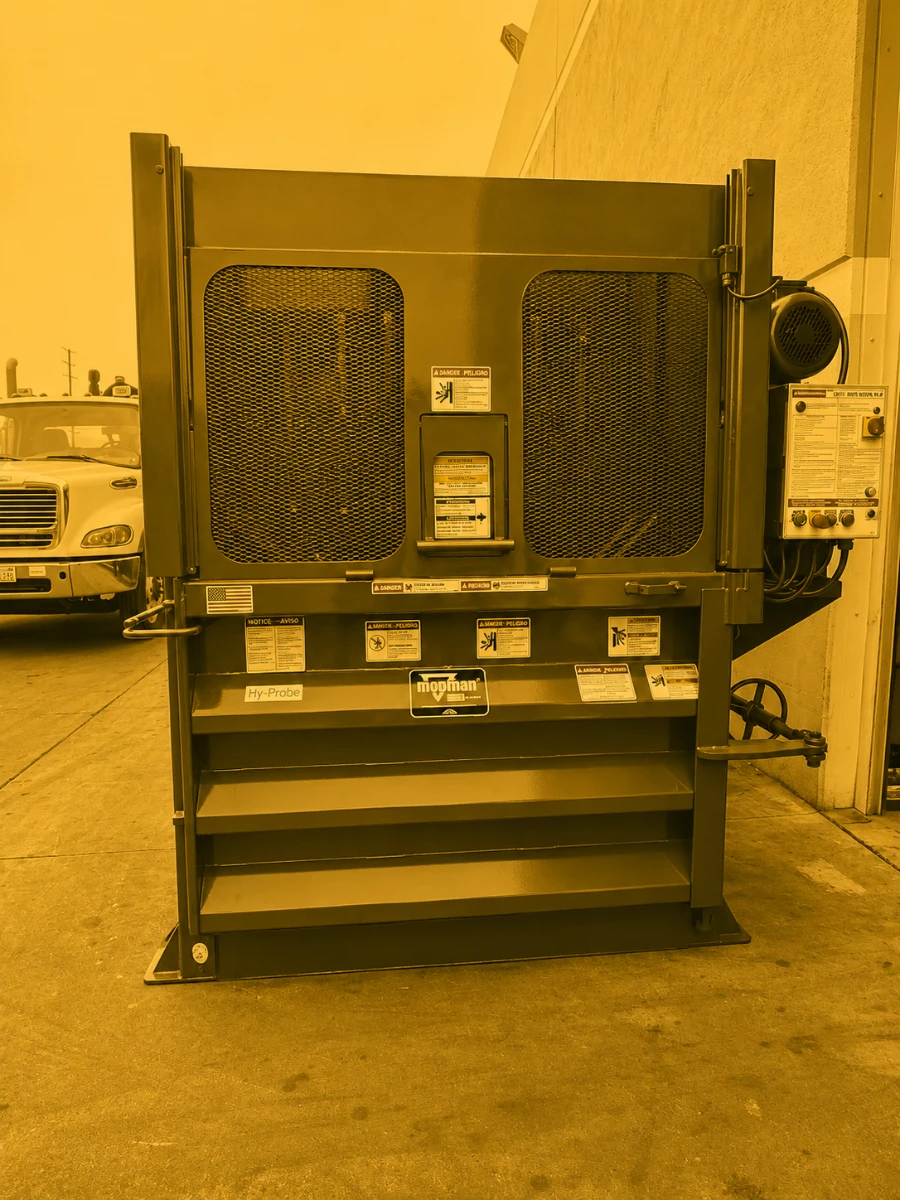
Every business that unpacks freight, restocks shelves, or ships products, ends up with the same problem: mountains of flattened boxes. Old corrugated cardboard (OCC) is bulky; it piles up fast, and hauling it away loose wastes both labor and dumpster space. That's where vertical cardboard balers come in. These machines compress loose cardboard into dense, strapped bales that are easy to store, easy to sell to recyclers, and dramatically cheaper to remove than uncompacted waste.
At The Mark-Costello Co., we've spent decades helping retailers, warehouses, grocery stores, and distribution centers in Southern California and beyond choose, install, and maintain the right baling equipment for their operations. Below, we break down exactly how vertical cardboard balers work, who benefits most from them, what to look for before you buy, and how to keep one running efficiently for years.
What a Vertical Cardboard Baler Actually Does
A vertical cardboard baler is a compaction machine with a single vertical ram that presses waste material downward into a rectangular chamber. Cardboard is loaded from the top or side; the ram compresses it under high hydraulic pressure, and once the chamber is full, the operator ties off the compressed block with wire or plastic strapping to form a finished bale. The bale is then ejected, usually by opening the front door and sliding it out onto a pallet or the floor.
Unlike horizontal balers, which run continuously and are built for extremely high volumes, vertical cardboard balers are cyclical: load, compress, repeat. That makes them simpler to operate, less expensive to purchase, and far more space-efficient; most units fit into a standard loading dock footprint or a back-of-house storage area.
The output is a dense, uniform bale that typically weighs several hundred pounds, depending on the machine's chamber size and compression force. Recyclers pay by weight, so denser bales translate directly into better rebates. Loose cardboard, by contrast, is mostly air; it fills a dumpster fast without adding much actual recyclable weight, meaning you pay more in hauling fees for less material moved.
For any business generating a steady stream of OCC - apartment communities, grocery stores, big-box retailers, distribution warehouses, print shops, and manufacturers - a vertical baler turns a daily nuisance into a manageable, even profitable, part of the waste stream.
Why Businesses Switch to Vertical Cardboard Balers
The case for vertical cardboard balers usually comes down to four measurable benefits:
Reduced hauling costs. Loose cardboard takes up enormous volume relative to its weight. A single vertical baler can reduce cardboard volume by a ratio of roughly 10:1 or more, which means far fewer pickups from your waste hauler and, in many cases, the ability to downsize or eliminate a dedicated cardboard dumpster.
Recycling revenue. Baled OCC has real resale value on the recycled paper market. Many recyclers won't even collect loose cardboard, or they pay significantly less for it, because it's inefficient to transport. A consistent supply of clean, well-formed bales can turn a waste expense into a small but steady revenue stream.
Space and safety. Loose boxes create clutter, trip hazards, and fire-code headaches, especially in retail stockrooms and warehouse aisles. A baler consolidates that mess into a single compact unit that's easy to stage near a dock door until pickup.
Labor savings. Instead of employees breaking down, bagging, or repeatedly hauling loose cardboard to a compactor or dumpster, a baler lets staff feed material into one machine in short, frequent cycles, a task that takes seconds rather than a dedicated cleanup shift.
Industries that see the fastest payback include grocery and retail chains, distribution and fulfillment centers, apartment and property management operations, print and packaging facilities, and manufacturers with heavy incoming-freight volume. If your dumpster fills primarily with flattened boxes rather than mixed trash, a baler is usually the single highest-impact piece of equipment you can add to your waste stream.
From an operational standpoint:
- Waste is generated and temporarily stored in bins or carts.
- Periodically, it is loaded into the compactor hopper.
- The compactor is activated (manually or automatically).
- Waste is compressed, and the container or bale is sealed.
- The compacted bundle is transported or disposed of, requiring fewer pickups.
- The cycle repeats, and your facility experiences fewer interruptions, less accumulation of loose waste, and reduced labour and transport costs.
Why Choose Us
Decades of Experience
Mark Costello has been a trusted name in waste management for decades, delivering reliable and effective solutions that businesses count on.
Cutting-Edge Technology
Using the latest technology, We ensures that waste management systems are efficient and up to industry standards, from food digesters to compactors.
Customized Solutions
At Mark Costello,we provides tailored waste management solutions that fit each business’s unique needs, ensuring a smooth integration into existing operations.
Focused on Sustainability
Mark Costello is dedicated to helping businesses achieve their sustainability goals by turning waste into valuable resources, supporting a greener future.
Choosing the Right Vertical Cardboard Baler for Your Facility
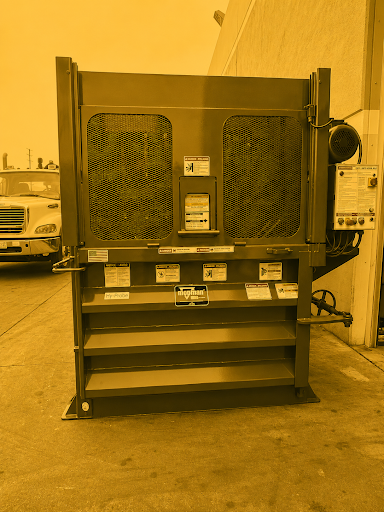
Not every vertical cardboard baler is sized or built the same way, and picking the wrong one is a common and costly mistake. A few factors matter most:
Volume of cardboard generated. A business producing a few bales a week has very different needs than a distribution center generating dozens of bales a day. Chamber size and cycle speed should match your actual throughput, not just your current dumpster size.
Available space and power. Vertical balers range from compact stockroom units that fit through a standard doorway to larger models requiring more clearance and higher electrical service. Ceiling height matters too, since the ram needs room to travel.
Bale density and weight requirements. Some recyclers set minimum bale weight or density requirements to pick up material efficiently. Make sure the machine you choose can reliably hit those targets; this is where hydraulic force and chamber dimensions come into play.
Loading method. Top-loading and door-loading configurations suit different workflows. A busy stockroom with constant foot traffic may benefit from a different loading style than a loading dock with forklift access.
Buy, lease, or rent. Not every operation wants to own equipment outright, especially seasonal businesses or those testing a new location. Flexible acquisition options let you match the investment to your actual usage pattern.
This is exactly the kind of decision worth walking through with a specialist rather than guessing from a spec sheet. Mark-Costello's team evaluates your cardboard volume, space, and workflow before recommending equipment, which is why our vertical balers are configured to match real operating conditions rather than a one-size-fits-all model.
Getting a vertical cardboard baler up and running correctly and keeping it that way is what determines whether it delivers years of trouble-free service or becomes a recurring headache.
Installation. Placement should account for clearance around the ram's full travel path, proximity to the dock or storage area where bales will be staged, and access to appropriate electrical service. A poorly placed unit creates bottlenecks instead of solving them, so it's worth mapping out material flow from where cardboard is generated to where bales are picked up before the machine ever arrives.
Operator training. Vertical balers are simple to run, but safe operation still matters. Staff should be trained on proper loading procedures, safe strapping techniques, and lockout/tagout protocols before ever operating the machine unsupervised. Most workplace incidents with balers stem from skipped safety steps, not equipment failure.
Routine maintenance. Hydraulic fluid levels, seals, strapping mechanisms, and door safety switches should be checked on a regular schedule. Dust and cardboard debris can accumulate around moving parts, so periodic cleaning extends component life significantly. A well-maintained baler can run reliably for well over a decade; a neglected one wears out its hydraulics and seals far sooner.
Service support. Downtime on a baler means cardboard piles back up fast, so having a responsive service and parts relationship matters as much as the initial equipment choice. Working with a supplier who stocks parts and understands the equipment they sold you rather than a generic distributor usually means faster turnaround when something needs attention.
Taken together, thoughtful installation, trained operators, and consistent maintenance are what separate a baler that pays for itself in a year from one that underperforms its whole service life.
Send Us a Message
Send us a message with your questions or concerns and our team member will contact you. We’d love to hear from you.
Client Testimonials
It’s been a great relationship with The Mark-Costello Company; they are very dependable to all of our waste handling requirements and have made us aware of the importance of recycling and the upcoming waste handling issues in the future.
Thank you for your services to our company. Your teamwork has been very attentive and diligent in the way it has been carried out. We are very pleased with the teamwork, the price and the quality of your services. We expect to continue an excellent business relationship with you in the near future.
The Model we operate is a AS 512 equipped with a unique “pull out drawer” making it easy for the Housekeeping Staff to load. This unit has a capacity of approximately 750 lbs. per cycle. We expect to keep our Mark-Costello autoclave in operation for another 8 years or longer!
Frequently Asked Questions
Here are answers to some of the most common questions we receive about commercial garbage compactor provided by The Mark-Costello Co.
How much does a vertical cardboard baler cost?
Pricing varies based on chamber size, hydraulic force, and features, ranging from smaller stockroom-sized units to larger high-capacity models. Buy, lease, and rent options are typically available, so the right structure depends on your budget and how much cardboard you generate..
How many bales can a vertical cardboard baler produce per day?
This depends on chamber size and how frequently the machine is loaded. A single-shift retail stockroom might produce a handful of bales a day, while a busy distribution center running the machine throughout the day can produce significantly more.
What size cardboard baler do I need for my business
It depends on your weekly cardboard volume, available floor space, and ceiling clearance. A quick way to estimate is to track how many dumpster pickups of loose cardboard your business generates per week, then compare that volume against a machine's rated output.
Can a vertical cardboard baler handle materials other than cardboard?
Many vertical balers can also compress plastic film, foam, paper, and other recyclables, though chamber configuration and pressure settings may need adjustment depending on the material. It's worth confirming compatibility with your specific waste stream before purchase.
How often does a vertical cardboard baler need maintenance?
Routine checks, hydraulic fluid, safety switches, and strapping components should happen on a regular schedule, with a more thorough inspection at least annually. Facilities running the machine heavily may benefit from more frequent service visits to avoid unplanned downtime.