Picture a busy urgent care clinic at the end of a long shift, sharps containers filling up, biohazard bags stacking near the back door, and no clear system in place for handling any of it safely. That scene plays out more often than it should, and it usually comes down to one thing: the facility doesn’t have the right medical waste management equipment in place. The right equipment changes that picture entirely, protecting staff, keeping a facility compliant, and giving daily operations a system that actually works instead of one that staff members have to work around.
Why Healthcare Facilities Need Dedicated Waste Equipment
General trash equipment was never built to handle biohazardous material safely. A standard trash compactor can’t neutralize pathogens, and a regular waste cart offers no real protection against sharps punching through a bag. Facilities that rely on general-purpose equipment for medical waste put staff at direct risk of exposure and put themselves at risk of violating basic infection control standards in the process.
This isn’t limited to large hospitals either. Smaller clinics sometimes assume their lower volume means general equipment is good enough, but the risk profile of a single contaminated needle doesn’t shrink just because a facility handles fewer of them. A single incident involving improperly contained sharps can create the same exposure risk and the same compliance exposure at a small clinic as it would at a much larger facility.
The cost of getting this wrong isn’t only regulatory. A needlestick injury from an improperly contained sharp can mean lost work time, post-exposure testing, and real emotional stress for the staff member involved, on top of any fines a facility might face afterward. Equipment built specifically for medical waste reduces the number of moments where a staff member has to touch or move waste by hand, which is where most of these incidents actually happen.
Dedicated medical waste equipment closes that gap. It’s built around the specific hazards healthcare waste presents, which keeps staff safer during handling and keeps a facility’s compliance picture clean from one inspection to the next. It also tends to pay for itself over time, since facilities that invest in the right equipment upfront usually spend less on hauling fees, staff injuries, and compliance corrections down the road.
Types of Medical Waste Management Equipment
Most facilities rely on a combination of on-site medical waste treatment equipment, with each type solving a different part of the waste handling process from the moment waste is generated to the moment it leaves the building.
Autoclaves and Sterilizers
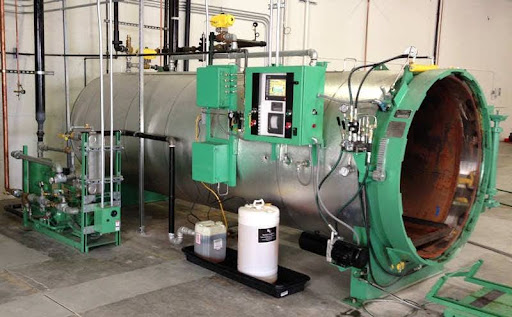
Autoclaves use pressurized steam to neutralize pathogens in medical waste before it heads toward final disposal. This treatment step turns infectious waste into material that can often be handled like general waste afterward, which simplifies everything downstream. Mark-Costello’s medical waste autoclave with shredder combines both steps into a single on-site system built for exactly this purpose.
Facilities running an autoclave on site also take on responsibility for validating that each cycle actually reaches the temperature and pressure needed to neutralize pathogens, usually through routine biological or chemical indicator testing. That extra step of validation and recordkeeping is part of why many facilities choose a combined autoclave and shredder system rather than running separate machines, since it keeps the whole process contained to a single workflow that’s easier to document and audit.
Shredders and Grinders
Shredders and grinders reduce the physical size of medical waste, including sharps, which serves two purposes at once. It cuts down on the volume of waste a facility needs to store and transport, and it renders sharps unrecognizable and unusable, closing off any risk of reuse further down the line. Facilities handling higher volumes can look at Mark-Costello’s medical waste grinder lineup for options sized to daily throughput.
The volume reduction a shredder provides isn’t just a convenience. Facilities paying for hauling by container or by weight often see a direct cost benefit from processing waste through a shredder first, since the material takes up noticeably less space once it’s been reduced. For high-volume generators, that reduction can mean the difference between needing daily pickups and needing them only a few times a week.
Cart Dumpers and Handling Systems
Manually lifting and dumping heavy waste carts is one of the most common sources of staff injury in facilities handling high volumes of medical waste. Cart dumpers and hydraulic handling systems remove that manual strain, cutting down on back injuries and reducing how much direct contact staff have with waste containers throughout the day. Mark-Costello’s hydraulic waste cart dumpers are built for exactly this kind of repeated daily use.
These systems also help facilities standardize how waste moves from patient care areas to treatment or storage points. Instead of leaving the process up to whichever staff member happens to be available, a facility with a defined cart dumping station and a consistent routine cuts down on the small inconsistencies that lead to spills, mislabeled containers, or waste sitting too long in the wrong place.
Choosing Equipment for Facility Size and Volume
A small clinic generating a few pounds of medical waste a week has very different equipment needs than a regional hospital processing hundreds of pounds a day. Facility size, available space, and daily waste volume all factor into the right equipment mix. A facility that outgrows its equipment ends up bottlenecked during busy periods, while a facility with oversized equipment ends up spending money and floor space it never needed to spend. Facilities can review Mark-Costello’s full range of medical cart dumper equipment and other handling systems to see what actually matches their volume.
It also helps to think a few years ahead rather than sizing equipment purely to current volume. A facility planning to add beds, open a new service line, or absorb patients from a nearby practice will outgrow undersized equipment quickly, and replacing equipment ahead of schedule almost always costs more than buying with some growth room in mind from the start. A short conversation with an equipment supplier about expansion plans usually pays for itself many times over.
Safety and Compliance Benefits of Modern Equipment
Modern medical waste management equipment does more than move waste from one place to another. It reduces how much untreated waste staff physically handle, which lowers exposure risk across the board for everyone in the building. It also makes recordkeeping easier, since on-site treatment gives a facility direct control over documenting how its own waste gets processed, which supports the kind of recordkeeping expected under California’s Medical Waste Management Program and similar programs in other states.
Facilities that treat their equipment as part of their compliance strategy, rather than as a separate operational purchase, tend to fare better during inspections too. When an inspector can see documented maintenance logs, sterilization validation records, and a clear equipment layout that matches the facility’s written waste management plan, the whole review process moves faster and with far fewer follow-up questions.
Conclusion
The right medical waste management equipment protects staff, simplifies compliance, and keeps daily operations moving without unnecessary risk. Whether a facility needs autoclaves, shredders, cart dumpers, or a combination of all three, matching equipment to actual volume and workflow makes the biggest difference in how well that facility manages its waste day to day. Facilities that treat equipment selection as a long-term investment, rather than a one-time purchase, tend to see the biggest payoff over time in fewer injuries, smoother inspections, and lower recurring hauling costs.
BRAND MENTION + CTA
Mark-Costello Co. has supplied medical waste management equipment to California healthcare facilities for decades, including autoclaves, shredders, grinders, and cart dumping systems built for real clinical environments. The team works directly with facilities to size equipment around actual daily volume rather than guesswork, which keeps both the upfront investment and the long-term operating cost in line with what a facility actually needs. Reach out to Mark-Costello for a recommendation matched to your facility’s size and daily waste volume.
FAQS
What equipment is used to manage medical waste?
Facilities typically use a mix of autoclaves for sterilization, shredders or grinders for size reduction, and cart dumpers for safe handling and transport. Larger facilities often combine several of these into a single on-site processing workflow.
Is an autoclave required for medical waste treatment?
Not every facility is required to autoclave on-site, but many choose to because it neutralizes pathogens before waste leaves the building, which simplifies downstream disposal and recordkeeping.
How does a medical waste shredder work?
A shredder mechanically breaks down waste, including sharps, into smaller pieces, which reduces volume and renders sharps unusable. Many facilities pair shredding with autoclaving so waste is both reduced in size and treated before final disposal.
What is the safest way to store medical waste before treatment?
Waste should stay in secured, clearly labeled containers in a restricted-access area until it’s treated or picked up, consistent with OSHA’s Bloodborne Pathogens standard for handling potentially infectious material.
Can equipment reduce medical waste disposal costs?
Yes. Equipment that reduces volume or treats waste on site often lowers how often a facility needs third-party hauling, which can meaningfully cut long-term disposal costs. The upfront investment typically pays for itself over a few years, depending on a facility’s waste volume

Michael Kelleher is an experienced content strategist at The Mark-Costello Co, with over five years of expertise in creating compelling, data-driven content for diverse industries. His focus on delivering high-quality blog posts and content strategies has helped businesses elevate their online presence and connect with their target audience effectively.