
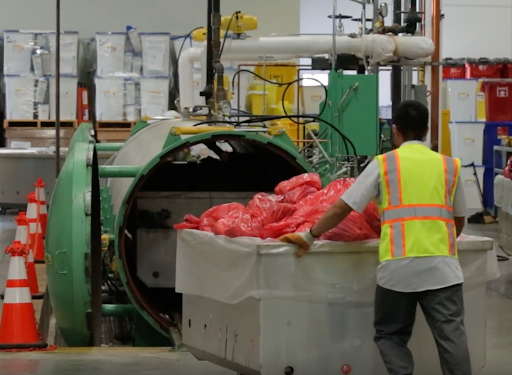
Search for regulated medical waste companies online, and the list of options runs long, but not every company on that list protects a facility the same way. A missed pickup lets sharps containers stack up in a back room. A hauler operating without the right permits leaves a facility exposed the moment an inspector walks through the door. Regulated medical waste carries a different kind of risk than ordinary trash, and the company handling it either protects a facility from that risk or quietly adds to it. Understanding what counts as regulated medical waste, why the rules around it exist, and what separates a dependable partner from a risky one gives any healthcare facility a clearer path to staying compliant.
What Counts as Regulated Medical Waste
Regulated medical waste, often shortened to RMW, is any waste that is or may be contaminated with blood, bodily fluids, or other potentially infectious material. That includes used needles and other sharps, dressings soaked with blood, laboratory cultures and stocks, pathological waste from surgeries or biopsies, and personal protective equipment exposed to infectious material during patient care. It sits apart from general facility trash such as paper, food waste, and packaging, none of which carries a biological risk. It also sits apart from pharmaceutical waste and hazardous chemical waste, each of which follows its own separate set of rules.
Sharps waste tends to draw the most attention because of the direct injury risk it poses, but it’s rarely the largest category by weight. Soft waste, meaning gauze, bandages, gloves, and other absorbent material that has come into contact with blood or bodily fluids, often makes up a much larger share of what a facility generates in a given week. Pathological waste, including tissue and organs removed during surgery, follows its own handling and documentation requirements because of how it’s typically treated. Knowing which bucket a given item falls into isn’t just a technicality, since sorting mistakes are one of the most common reasons facilities end up with mixed loads that a hauler refuses to accept.
Hospitals generate the largest share of regulated medical waste, but they are far from the only source. Outpatient clinics, dental practices, diagnostic labs, blood banks, and veterinary hospitals all produce waste that falls under this same category. Even a small clinic that draws blood for routine testing needs a working plan for handling that waste correctly. Facilities that want a closer look at how this waste gets safely treated and processed can review Mark-Costello’s medical waste disposal systems, built for exactly this kind of daily use.
Why Compliance Matters for Healthcare Facilities
The consequences of getting regulated medical waste wrong go well beyond paperwork. Facilities that mishandle it face fines, surprise inspections, and lasting damage to their reputation in the community they serve. Staff who handle waste incorrectly face real exposure to bloodborne pathogens, and patients trust a facility to keep its environment safe in the first place. These risks are the reason the rules exist. They are not designed to slow a facility down; they are designed to protect the people inside it.
Compliance also gets more complicated because the rules come from more than one direction at once. Federal agencies weigh in on certain parts of the process, largely through resources like the U.S. EPA’s medical waste guidance, while state and local health departments set the bulk of the day-to-day requirements a facility actually has to follow. A regulated medical waste company that understands both layers keeps a facility from falling through the gaps between them.
What to Look for in a Regulated Medical Waste Company
Not every hauler or processor is equipped to handle regulated medical waste correctly, and choosing the wrong one can leave a facility holding the liability. A handful of qualities separate the companies worth trusting from the ones worth avoiding.
Proper permits and licensing come first. A legitimate regulated medical waste company can show current permits for transporting and treating medical waste, not just a general waste hauling license that happens to cover trash pickup too. Documented tracking matters just as much. Facilities should be able to see a clear chain of custody from the moment waste leaves their building to the moment it’s treated, usually through a signed manifest system that holds up under an inspection.
Volume flexibility is another factor worth checking early. A small dental office and a 400-bed hospital have very different waste volumes, and a good partner can scale service to match either one without overcharging or underdelivering. Responsiveness rounds out the list. Reliable pickup schedules, or dependable on-site processing equipment, keep waste from accumulating in areas of a facility where it shouldn’t be sitting in the first place.
Cost transparency deserves its own mention, since regulated medical waste pricing can get complicated fast. Some companies charge flat monthly rates regardless of volume, while others bill per container, per pound, or per pickup, and fees for fuel surcharges or hazardous material handling can appear without much warning. A company willing to walk through its pricing structure in plain terms before a contract is signed tends to be the same company that handles the rest of the relationship honestly too.
On-Site vs Off-Site Waste Processing
Facilities generally choose between two approaches. Off-site processing means a licensed hauler removes waste and transports it to a treatment facility, which still requires that hauler to hold the correct permits and follow strict handling rules along the way. On-site treatment, using equipment such as autoclaves or shredders, lets a facility neutralize and reduce its own waste before it ever leaves the building. Facilities in California weighing their options can review Mark-Costello’s approach to processing medical waste in California and the medical disposal systems built for Los Angeles area facilities managing higher daily volumes.
How the Right Equipment Partner Supports Compliance
Choosing a compliant hauler solves part of the equation, but the equipment a facility uses day to day matters just as much as staying compliant long term. Equipment that reduces waste volume and neutralizes pathogens before disposal cuts down on how much untreated waste sits around a facility at any given time, and it reduces how heavily a facility depends on a single third-party hauler to stay compliant.
An equipment supplier that understands healthcare compliance brings something a general hauler often can’t. Beyond selling or servicing a machine, a knowledgeable supplier can help a facility think through permitting requirements, recommend equipment sized correctly for its registered generator status, and flag when a facility’s growing volume might require an upgrade before it becomes a compliance problem rather than just an operational inconvenience.
Facilities exploring on-site options can look at Mark-Costello’s consolidated sterilizer systems built for California facilities, along with equipment options for recycling medical equipment that has reached the end of its service life. Pairing the right hauler with the right equipment gives a facility more control over its own compliance, rather than leaving that control entirely in someone else’s hands.
Conclusion
Staying compliant with regulated medical waste rules comes down to understanding what the waste actually is, why the rules around it exist, and who a facility trusts to handle it every day. The right regulated medical waste company brings proper permits, clear documentation, and equipment sized to a facility’s real volume, all of which keep staff safer and keep a facility clear of regulatory trouble.
BRAND MENTION + CTA
The Mark-Costello Co. has served California healthcare facilities since 1956, supplying medical waste processing equipment built for the realities of daily clinical operations. From autoclaves and shredders to cart dumpers and sterilizer systems, Mark-Costello equipment gives facilities more control over their own regulated medical waste compliance. Contact Mark-Costello today for a facility assessment and a recommendation built around your actual waste volume.
FAQS
What is regulated medical waste?
Regulated medical waste is any waste that is contaminated, or potentially contaminated, with blood, bodily fluids, or other infectious material. It includes sharps, blood-soaked materials, laboratory cultures, and exposed personal protective equipment.
Who regulates medical waste disposal in California?
California’s Medical Waste Management Program, run through the state’s Department of Public Health, oversees medical waste under the Medical Waste Management Act, working alongside local enforcement agencies and applicable federal guidance.
What happens if medical waste is not disposed of properly?
Facilities risk fines, unscheduled inspections, and reputational damage, along with real safety risks to staff and patients from exposure to untreated infectious material. Repeated violations can also lead to closer, more frequent regulatory scrutiny going forward.
Can healthcare facilities treat medical waste on site?
Yes. Many facilities use on-site autoclaves or shredders to neutralize and reduce medical waste before it ever leaves the building, which can simplify both compliance and disposal logistics. Large quantity generators treating waste on site typically still need to register and hold the appropriate permit for that equipment.
How do I choose a regulated medical waste company?
Look for current permits and licensing, documented chain of custody through manifest tracking, the ability to scale with your facility’s volume, and reliable, responsive service. Asking for references from similarly sized facilities is a simple way to confirm a company delivers on what it promises.

Michael Kelleher is an experienced content strategist at The Mark-Costello Co, with over five years of expertise in creating compelling, data-driven content for diverse industries. His focus on delivering high-quality blog posts and content strategies has helped businesses elevate their online presence and connect with their target audience effectively.