
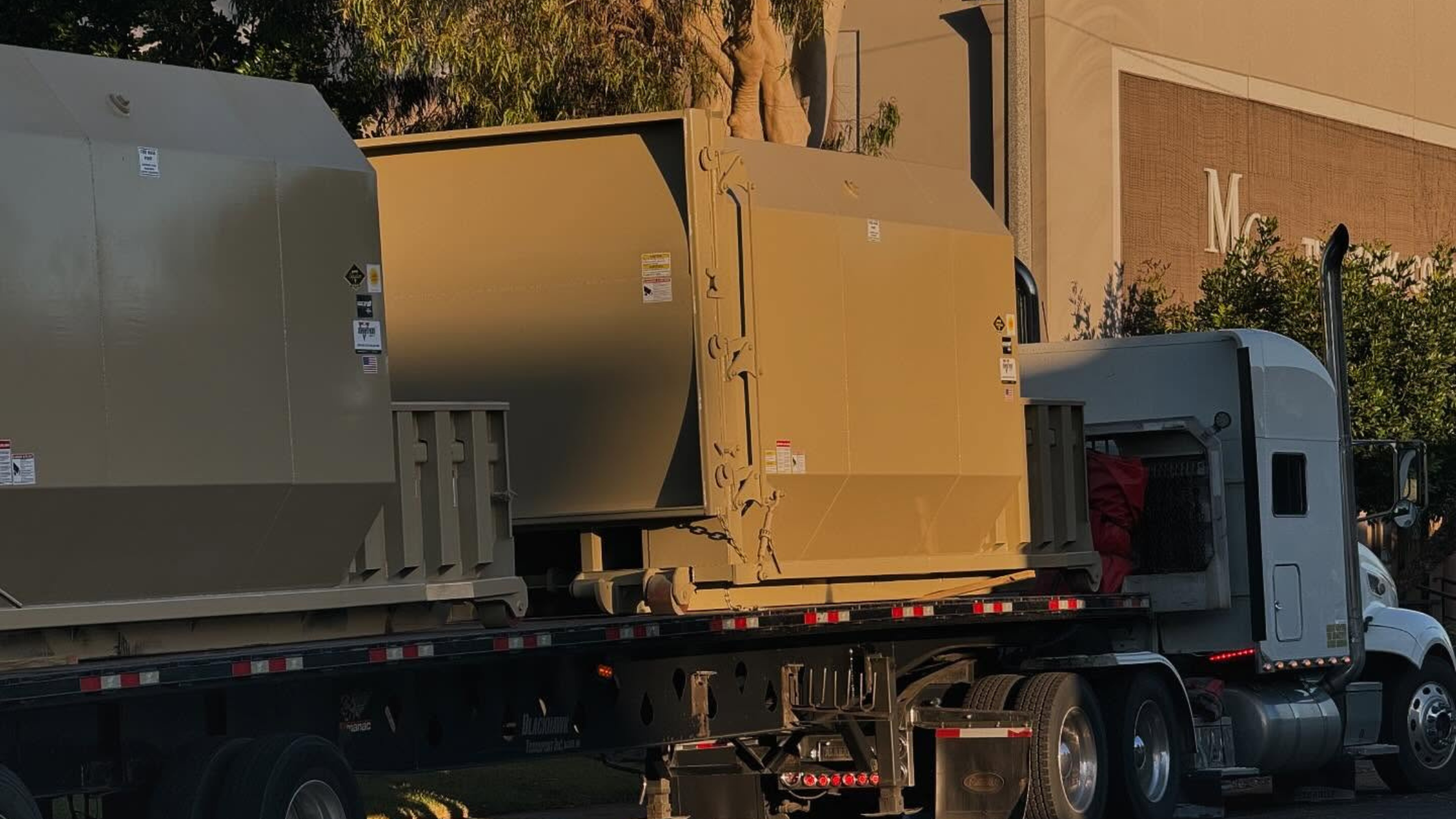
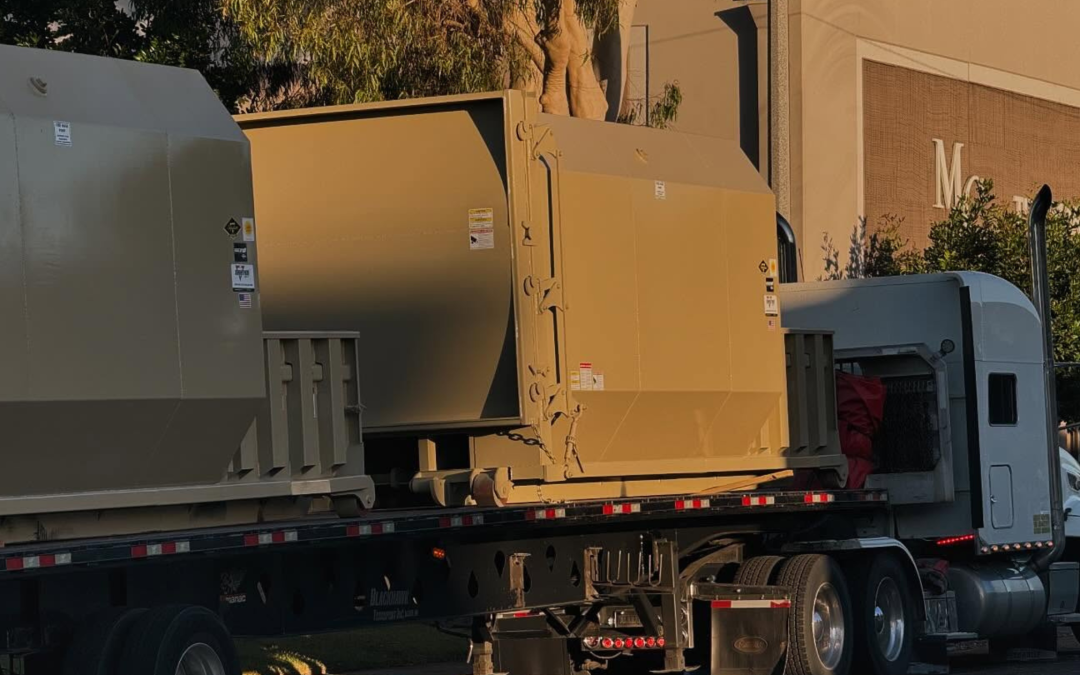
Walk behind a busy restaurant, grocery store, or apartment complex on pickup day, and you will often see a dumpster that looks full but weighs surprisingly little. Most of what fills it is empty space trapped between loose bags, boxes, and packaging. Your hauler still charges full price to empty it, which means many businesses pay every month to move air. Commercial trash compactors solve that problem by squeezing the empty space out of the waste stream, so the same container holds far more trash and needs emptying far less often.
If your waste bill keeps creeping up while your business volume stays steady, the issue probably isn’t how much trash you make. The issue is how much room that trash takes up. This guide explains why hauling costs climb, what compaction actually does to your waste, where the savings come from, and how to choose a compactor that fits your site.
Why Your Hauling Bill Keeps Climbing
Most commercial waste contracts don’t charge by weight. Haulers typically bill by container size and pickup frequency, so a 6-yard bin emptied three times a week costs more than the same bin emptied once, no matter how heavy the contents are. That pricing model rewards businesses that fill containers efficiently and punishes those that don’t.
Loose trash fills containers badly. A flattened box lies flat, but most staff toss boxes in whole. Bags of light packaging, foam, and plastic film create pockets of air that stack on top of each other until the lid won’t close. The bin reaches capacity by volume long before it reaches any meaningful weight.
Busy sites usually respond the only way they can. They add another pickup day, rent a bigger container, or pay an overflow fee when trash spills onto the ground. Each fix raises the monthly bill, and none of them address the real cause. Over a year, those extra pickups and surcharges can add thousands of dollars to the cost of running a single location, and multi-site operators feel it across every property.
The Hidden Costs Beyond the Invoice
The hauling invoice only tells part of the story. Overflowing dumpsters attract rodents, birds, and insects. They create odors that drift toward customer entrances and loading docks. Loose trash blows across parking lots and into storm drains, which can draw complaints from neighbors and attention from local inspectors. Staff spends time picking up spilled bags and rearranging bins to make room. These costs rarely show up on a waste bill, but they eat into labor hours and your property’s appearance every single day.
What Compaction Does to Your Waste Volume
A commercial compactor uses a hydraulic ram to press waste into a container with tremendous force. The ram crushes boxes, collapses bags, and squeezes out the air pockets that loose trash leaves behind. The result is a dense, tightly packed load that takes up a fraction of its original space.
Industry professionals describe this reduction as a compaction ratio. A 4-to-1 ratio means four cubic yards of loose trash shrink down to roughly one cubic yard after compaction. Actual ratios depend on the type of waste. Cardboard and dry packaging compress very well, while dense food waste compresses less, but most mixed commercial streams see a dramatic drop in volume.
That reduction changes the math on every pickup. If your container now holds three or four times as much trash, it fills three or four times more slowly. A business that once needed pickups five days a week might drop to one or two. The trash doesn’t disappear, but the number of trips your hauler makes to collect it falls sharply.
Compaction also cleans up your waste area. Compactors load through a chute or hopper and seal the trash inside a closed container. That design keeps waste out of sight, cuts down on odors, and gives pests far less to work with. Facilities that switch from open dumpsters often notice a cleaner, quieter back of house within the first few weeks.
Where the Savings Show Up
Fewer pickups deliver the most obvious savings. Because haulers charge per pull, cutting your pickup frequency in half can cut that line of your bill nearly in half too. Large compactors also hold enough volume that some businesses can switch from several small dumpsters to one compactor container, which simplifies service and can lower rental fees.
Labor savings come next. Without a compactor, staff often break down boxes by hand, stomp bags to make room, and haul trash across the property to whichever bin still has space. A compactor placed close to where waste is generated lets employees load trash quickly and get back to work. Pairing the unit with waste cart dumpers for compactors removes the heavy lifting entirely, since a hydraulic lift tips full carts straight into the hopper.
You also stop paying for problems. Sealed containers mean fewer overflow charges, fewer pest control visits, and less time spent cleaning up spills. Some properties even reclaim parking spaces or loading areas that once held extra dumpsters.
Smart monitoring can push savings further. Container fullness measuring systems track how full a compactor is and signal when it actually needs emptying. Instead of paying for scheduled pickups on half-full containers, you call the hauler only when the load is ready. That approach gets the most value out of every single pull.
Choosing the Right Compactor for Your Site
Not every compactor fits every business. The right choice depends on what you throw away, how much of it you produce, and where the unit will sit. Mark-Costello’s full commercial compactor range covers most of these situations, but understanding the two main types helps you narrow the field.
Stationary Compactors for Dry Waste
A stationary compactor bolts to a concrete pad and pushes waste into a separate, detachable container. When the container fills, the hauler disconnects it, takes it away, and drops off an empty one. The compactor itself stays put. This setup works best for dry waste such as cardboard, packaging, paper, and general trash from retail stores, warehouses, offices, and distribution centers. Models like the Ram-Jet 225 series stationary compactors suit facilities with steady daily volume and limited space.
Self-Contained Compactors for Wet Waste
A self-contained commercial trash compactor combines the compaction unit and the container in one sealed, leak-resistant body. The hauler takes the entire unit for emptying. Because the system holds liquids inside, it handles wet waste far better than a stationary setup. Restaurants, grocery stores, hospitals, hotels, and food processors generally choose self-contained units for that reason, since they keep juices and odors from leaking onto the pavement.
Matching Capacity to Your Real Volume
Size the compactor to your actual daily waste, not a rough guess. An undersized unit fills too quickly and erases your savings, while an oversized one ties up money and space you don’t need. Before you buy, measure how many containers you fill each week and how often your hauler empties them. Then check practical details such as the available footprint, power supply, and whether hauler trucks can safely reach the unit. Confirm your hauler’s container compatibility too, since they will need the right equipment to service it.
Adding It All Up
A simple payback estimate helps you see whether a compactor makes sense. Start with your current monthly hauling cost. Then estimate how many pickups you would need after compaction, using a conservative compaction ratio. The difference between the two bills is your monthly savings. Divide the cost of the compactor by that monthly figure, and you get a rough payback period in months.
Many high-volume businesses see payback within a few years, and some recover their investment much faster. After that point, the savings flow straight to the bottom line for the rest of the equipment’s working life. Labor savings, fewer overflow fees, and lower pest control costs shorten the timeline further, even though they’re harder to put a precise number on.
You also have options for how you pay. Buying gives you full ownership and the lowest long-term cost. Leasing spreads the cost into predictable monthly payments, which can let the hauling savings cover the equipment payment from day one. Renting suits short-term needs or businesses that want to test compaction before committing. Mark-Costello explains each route on its buy, lease, or rent page, so you can match the financing to your budget.
Keep safety in your plan as well. Compactors use powerful hydraulic rams, so staff should receive proper training, and anyone servicing the equipment must follow OSHA lockout/tagout procedures to control stored energy before working on the machine. A well-maintained, properly used compactor protects both your workers and your investment.
Conclusion
Hauling costs rarely rise because a business suddenly creates more trash. They rise because loose waste wastes container space, and haulers charge for every trip it takes to clear that space. Commercial trash compactors turn that fixed, frustrating expense into a cost you can actually control. They shrink waste volume, reduce pickups, cut labor, and clean up your property in the process.
If your dumpsters overflow, your hauler visits several times a week, or your waste bill keeps climbing, take a close look at your current pickup frequency. That number is often the clearest sign of how much money compaction could save you.
Work With The Mark-Costello Co.
The Mark-Costello Co. has helped businesses manage waste more efficiently since 1956. From its home base in Paramount, California, the company supplies stationary and self-contained compactors, cart dumpers, balers, and container monitoring systems, along with professional installation, preventive maintenance, and repair service. Its team sizes each system to your actual waste volume and site layout, so you don’t pay for more machine than you need. Ready to find out how much you could save on hauling? Contact The Mark-Costello Co. today to request a waste volume assessment for your facility.
Frequently Asked Questions
How much can a trash compactor reduce hauling costs?
Savings depend on your waste type, current pickup schedule, and compaction ratio. Because compactors shrink loose trash to a fraction of its original volume, many businesses cut their number of pickups by half or more. Since haulers usually charge per pickup, a lower pickup count leads directly to a lower monthly bill. Facilities with large amounts of cardboard and dry packaging often see the biggest reductions, while those with dense food waste still see meaningful savings.
What is the difference between a stationary and a self-contained compactor?
A stationary compactor stays fixed to a concrete pad and pushes waste into a separate container that the hauler removes and replaces. It works well for dry waste such as cardboard and packaging. A self-contained compactor combines the compaction unit and container in one sealed body that the hauler takes away as a whole. Its leak-resistant design makes it the better choice for wet waste from restaurants, grocery stores, and hospitals.
How long does it take for a commercial compactor to pay for itself?
Payback periods vary widely, but many high-volume businesses recover their investment within a few years. To estimate yours, compare your current monthly hauling cost with the projected cost after compaction, then divide the equipment price by the monthly savings. Labor savings, fewer overflow charges, and lower pest control costs can shorten the payback period further. Leasing can also let hauling savings offset the monthly payment right away.
Do I need permission from my waste hauler to install a compactor?
You should always talk with your hauler before installing a compactor. The hauler needs compatible trucks and equipment to service your container, and they may adjust your contract and pricing once compaction changes your pickup frequency. Some municipalities also require permits, a specific concrete pad, or clearance for truck access. Checking these details early prevents delays and ensures your new compactor works smoothly with your existing service.
How much space does a commercial trash compactor need?
Space needs depend on the model and capacity you choose. Stationary units require room for the compactor plus a detachable container, while self-contained units combine both into one footprint. Every installation also needs clear space for hauler trucks to approach, load, and leave safely, along with access to the proper power supply. A professional site assessment helps confirm the right placement before you commit to a specific unit.

Michael Kelleher is an experienced content strategist at The Mark-Costello Co, with over five years of expertise in creating compelling, data-driven content for diverse industries. His focus on delivering high-quality blog posts and content strategies has helped businesses elevate their online presence and connect with their target audience effectively.