
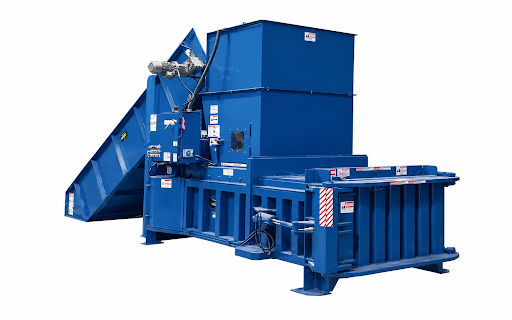
A baler that turns cardboard into neat, dense blocks can struggle the moment someone feeds it a pile of stretchy plastic film. The film springs back, the bale comes out loose, and the recycler offers less for it. That mismatch happens more often than most facilities realize. Recycling balers come in many shapes and sizes, and each one handles certain materials far better than others. Choosing the right machine starts with one simple question. What do you actually throw away most?
This guide walks through how different materials behave under pressure, which balers suit cardboard, plastics, and mixed streams, and which features matter no matter what you bale. By the end, you will know how to match equipment to your waste stream so you avoid jams, weak bales, and wasted money.
Why Material Type Changes Everything
Every recyclable material reacts differently when a baler’s platen presses down on it. Cardboard, also called old corrugated containers or OCC, crushes predictably. It folds, flattens, and stays put once compressed, which makes it one of the easiest materials to bale.
Plastic film behaves almost the opposite way. Stretch wrap, shrink wrap, and poly bags compress under force but try to expand the moment the pressure lifts again. Engineers call this memory or rebound. Without enough compression force and a design that holds the bale shape while it gets tied, film bales loosen and lose density.
Rigid plastics such as bottles, jugs, totes, and containers bring their own challenge. They trap air inside and resist crushing until they break. Mixed streams combine all of these behaviors in one load, which makes consistent bales harder to produce.
What Happens When You Choose Wrong
The wrong baler costs money in several ways. Loose bales take up more space on trucks and in storage. Recyclers often pay less for light or inconsistent bales, and some reject contaminated loads entirely. Operators also lose time when a machine jams, or when they need to rebale material that didn’t hold together. Over months, those small losses add up to a real gap between what your recyclables could earn and what they actually earn.
Balers Built for Cardboard
Cardboard makes up the largest recyclable stream for most retailers, grocery stores, warehouses, and distribution centers. Fortunately, it also ranks as the easiest material to bale well. The main decision comes down to how much cardboard you generate and how much floor space you can spare.
Vertical Balers for Retail and Grocery Volumes
Vertical balers load from the front and compress downward. They take up very little floor space, often fitting into a stockroom corner or beside a loading dock. Staff toss boxes into the chamber throughout the day, run a cycle, and tie off a bale once the chamber fills.
Vertical units suit businesses that produce steady but moderate cardboard volumes. A single grocery store, a big box retailer, or a small warehouse can usually keep up with its daily boxes using one well-sized vertical baler. Mark-Costello’s range of cardboard balers includes vertical models sized for different volumes, from compact stockroom units to heavier machines that produce mill-size bales.
Horizontal Balers for High Volume Operations
When cardboard arrives faster than staff can load a vertical unit, a horizontal baler makes more sense. Horizontal balers compress material sideways and often load from a conveyor, a hopper, or a direct feed from a compactor line. Many models tie bales automatically, which keeps the machine running with little operator involvement.
Distribution centers, manufacturing plants, and recycling facilities often choose horizontal equipment for this reason. A closed-end horizontal baler works well for facilities that process steady volumes of a single material and want dense, uniform bales without the larger footprint of a full production line.
Bale Weight and Value
Bale weight matters because recyclers and mills price cardboard by weight and quality. Dense, well-formed bales of clean OCC load efficiently onto trucks and command better prices than light or contaminated bales. Keeping cardboard dry and free of food, plastic, and trash before it enters the baler protects that value. Many facilities find that a little sorting discipline on the floor pays off noticeably at sale time.
Balers for Plastic Film and Rigid Plastics
Plastics reward businesses that bale them correctly, but they demand more from the equipment. Film in particular has real resale value when it comes off the baler clean and dense, which makes the right machine worth the investment.
Handling Stretch Wrap and Film
Film needs strong compression force and a chamber design that holds the bale tightly while operators tie it. Without both, the bale relaxes and loses shape. Many facilities that handle large amounts of pallet wrap dedicate a separate baler to film, so it never mixes with cardboard. Keeping the two streams apart produces cleaner bales of each, and recyclers generally pay more for clean, single-material loads.
Preparing Rigid Plastics
Bottles, jugs, and containers often need preparation before baling. Caps trap air and stop the material from compressing fully, and bulky items create gaps inside the bale. Pre-crushers break down rigid plastics, drums, and containers before they reach the baler, which helps the machine produce denser bales and reduces strain on the equipment.
Keeping Plastic Streams Clean
Contamination hurts plastic value more than almost anything else. Food residue, labels, mixed resin types, and stray trash all reduce what a recycler will pay. Clear signage, separate collection bins, and short staff training sessions help keep plastic streams clean from the start. A clean stream also keeps the baler running smoothly, since foreign objects can damage the chamber or cause jams.
Handling Mixed Materials
Some facilities generate several recyclable streams at once and don’t have the space for a dedicated baler for each one. Others process a wide variety of materials as part of their core business. In both cases, the choice comes down to throughput and how much sorting the operation can realistically support.
When a Two-Ram Baler Makes Sense
Two-ram horizontal balers use one ram to compress material and a second ram to eject the finished bale. That design lets the machine switch between different materials quickly, including cardboard, film, plastics, paper, and even some metals. Recycling centers, material recovery facilities, and large distribution operations often rely on two-ram machines because they handle varied streams with high throughput and consistent bale density.
Why Sorting Before Baling Pays Off
Even the most versatile baler can’t turn a mixed, dirty load into a high-value product. Recyclers pay the most for clean, single-material bales, and they pay much less for mixed loads that need further sorting. Sorting material before it reaches the baler usually earns more over time, even when it takes a little extra effort on the floor. Many businesses find a practical middle ground by baling their biggest stream, often cardboard, separately and handling smaller streams in batches.
Features That Matter Across Every Material
Whatever you bale, a few features separate a reliable machine from a frustrating one.
Compression force determines how dense your bales get. Higher force produces heavier bales, which matters most for film and mixed loads. Chamber size controls how much material you can load before each cycle and influences final bale dimensions, which should match what your recycler wants to receive.
Bale tying methods affect labor. Manual tie systems cost less up front, while automatic tie systems save significant time on high-volume lines. Safety features protect your team. Look for interlocked gates, clear controls, and guarding that keeps hands away from moving parts. Anyone servicing a baler must also follow proper lockout procedures before working on the machine.
Finally, check footprint and power needs. Measure the space carefully, confirm ceiling height for vertical units, and verify whether your building can supply the required electrical service. These details often decide which models will work before price even enters the conversation.
Loading Method and Workflow
Think about how material will reach the baler. In a retail stockroom, staff usually carry boxes to a front-loading vertical unit, so the door height and chamber opening should suit the size of the boxes you receive most often. In a warehouse or distribution center, material may arrive on carts, forklifts, or conveyors, which favors a horizontal baler with a wide hopper or a conveyor feed. Placing the baler close to where recyclables pile up saves more labor than almost any other single decision.
Service and Long-Term Reliability
A baler only saves money while it runs. Hydraulic systems, seals, platens, and tying components wear over time, especially on machines that cycle many times a day. Regular preventive maintenance catches small problems before they turn into breakdowns that leave cardboard stacking up on the floor. When you compare equipment, look at how easily you can get parts, whether a local service team supports the machine, and what a typical maintenance schedule looks like. A slightly higher upfront price often makes sense for a baler that stays dependable for years.
California businesses should also remember that state law requires many commercial operations to recycle. Under California’s mandatory commercial recycling rules, businesses that generate four or more cubic yards of commercial solid waste per week must arrange recycling service. A baler helps meet that requirement efficiently while turning recyclables into a sellable product.
Conclusion
No single machine does everything well. The best recycling balers fit your facility’s main material, daily volume, and available space. Cardboard-heavy operations often thrive with a vertical or closed-end horizontal unit, film and plastics need strong compression and clean streams, and mixed material operations benefit from the flexibility of a two-ram design.
Start by measuring what you throw away and how much of it you produce. With that information in hand, choosing among recycling balers becomes far simpler, and the right machine can cut hauling costs, free up floor space, and turn waste into revenue.
Work With The Mark-Costello Co.
Since 1956, The Mark-Costello Co. has supplied and serviced waste handling and recycling equipment for businesses across California and beyond. Its baler lineup includes vertical balers, closed-end horizontal balers, two-ram balers, and heavy-duty models, supported by installation, preventive maintenance, parts, and repair service from its Paramount headquarters. The team looks at your actual material mix and volume before recommending a machine, so you get equipment that fits your operation. Explore the full range of Mark-Costello balers or contact the team today for a material-specific recommendation.
Frequently Asked Questions
Can one baler handle both cardboard and plastic?
Many balers can process both materials, but results vary. Vertical and horizontal balers handle cardboard easily, while plastic film needs stronger compression and a design that holds the bale shape. Two-ram balers switch between materials most effectively. Even with a capable machine, most facilities bale cardboard and plastic separately, because recyclers pay more for clean, single-material bales than for mixed loads.
What is the difference between a vertical and a horizontal baler?
A vertical baler compresses material downward and takes up very little floor space, which suits retail stores, grocery stores, and smaller warehouses with moderate volumes. A horizontal baler compresses material sideways and often feeds from a conveyor or hopper, which suits distribution centers and recycling operations with high, continuous volumes. Horizontal units often tie bales automatically, while most vertical units require manual tying.
How much does a bale of cardboard typically weigh?
Bale weight depends on the baler’s size and compression force. Small vertical balers produce lighter bales suited to stockroom use, while larger vertical units can produce mill-size bales. Horizontal balers typically produce the heaviest and most uniform bales. Your recycler may have preferred bale sizes and weights, so check with them before choosing equipment.
Can I sell baled materials to recyclers?
Yes. Many recyclers buy baled cardboard, plastic film, and other materials, especially when bales come out clean, dense, and consistent. Prices rise and fall with commodity markets, so revenue varies over time. Even when market prices drop, baling usually lowers hauling costs because recyclables leave the general waste stream, which reduces trash pickups.
How much volume justifies buying a baler?
There’s no single threshold, but businesses that fill a dumpster with cardboard or plastic every few days usually benefit from a baler. Start by tracking how much recyclable material you produce each week and what you pay to haul it. Compare that cost with the price of a baler plus the potential resale value of your bales. Leasing can make a baler affordable even for moderate volume operations.

Michael Kelleher is an experienced content strategist at The Mark-Costello Co, with over five years of expertise in creating compelling, data-driven content for diverse industries. His focus on delivering high-quality blog posts and content strategies has helped businesses elevate their online presence and connect with their target audience effectively.