
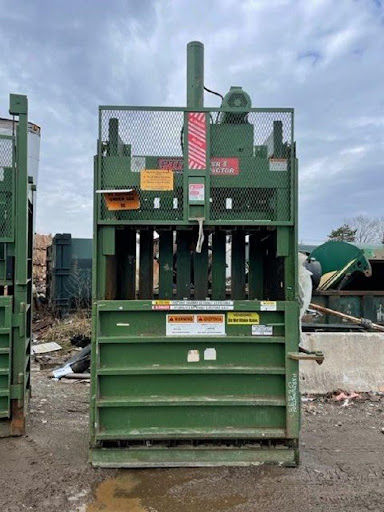
Cardboard boxes pile up faster than staff can flatten them, recycling bins overflow by midweek, and hauling costs keep climbing even though nothing about the business has really changed. For busy facilities, that cycle usually means it’s time to look at heavy-duty vertical balers. A baler built for real daily volume turns a constant mess into a manageable, and sometimes even profitable, part of daily operations, freeing up staff time and storage space that were previously lost to loose waste.
What Vertical Balers Do
Mark-Costello’s line of vertical balers compresses cardboard, plastic film, shrink wrap, and other recyclables into dense, tightly bound bales. Instead of loose material taking up an entire storage room, a baler condenses it into stackable units that are far easier to store, move, and haul away. That compression also means fewer pickups are needed overall, since a single bale holds far more material than the same volume of loose, uncompressed waste.
The process itself is straightforward. Staff load material through a top or front-loading door into the baling chamber, and a hydraulic ram compresses it against the chamber walls. Once the chamber is full, the finished bale gets tied off with wire and ejected, ready to stack or load for pickup. Facilities running a baler daily can move through this cycle multiple times per shift without much added labor once staff is used to the process.
Over the course of a year, that shift adds up to a meaningful reduction in hauling trips, storage space, and staff hours spent wrestling with loose cardboard. Facilities that track the difference before and after installing a baler often find the equipment pays for itself faster than expected, particularly once reduced hauling frequency and any recycling revenue are factored into the total picture.
Signs Your Facility Needs a Heavy Duty Baler
A few signs point clearly toward needing heavier equipment. Dumpsters or recycling bins that overflow before the scheduled pickup are one clue, especially when it happens weekly rather than occasionally. Staff spending real time each day flattening boxes or stuffing overfull bins is another sign that a manual process has outgrown its usefulness. Rising hauling costs tied to volume rather than weight round out the list, since many haulers charge more for frequent pickups regardless of how much material actually sits inside each load.
Safety concerns often show up around the same time. Loose cardboard and shrink wrap piling up near loading docks or storage areas create trip hazards and block clear paths for staff and equipment. Facilities that notice these patterns building up month after month usually find that a baler pays for itself faster than expected, simply by removing the daily friction a manual process creates.
Seasonal spikes are worth watching too. A retail location that manages fine most of the year but drowns in cardboard during a holiday rush or a major promotional event is telling a facility manager something important: current equipment, or the lack of it, was sized for an average week rather than the facility’s actual peak volume. Sizing a baler for peak demand rather than average demand prevents that same scramble from repeating every year.
Key Features of Heavy Duty Vertical Balers
Heavy-duty models, like Mark-Costello’s vertical balers built for California facilities, are built differently than lighter, entry-level balers. Higher compression force produces denser, heavier bales, which means fewer bales and fewer trips for hauling over time. Durable steel construction holds up under continuous, high-volume use rather than wearing down after a few months of heavy daily operation. Safety interlocks and an easy-load door design also matter, since a baler running every day needs to protect operators without slowing down the loading process.
Chamber size is another detail worth comparing across models. A larger chamber holds more material per cycle, which reduces how often staff need to start a new bale, but it also takes up more floor space and usually costs more upfront. Facilities weighing chamber size against available space often find that a mid-size heavy-duty model strikes the right balance between throughput and footprint, especially in retail backrooms or loading docks where space is already tight.
Bale weight and density also affect how a facility handles the finished product. Heavier, denser bales are often more attractive to recycling buyers, since they represent more usable material per pickup, but they also require handling equipment, such as a forklift, that can safely move that added weight. Facilities without existing material handling equipment should factor that into the decision alongside the baler itself.
Vertical vs Horizontal Balers
Vertical balers work well for facilities with moderate volume and limited floor space, since the design has a smaller footprint and loads from the top. Horizontal balers suit continuous, very high-volume operations, often running with a conveyor feed rather than manual loading, such as Mark-Costello’s two-ram series balers. Most retail, warehouse, and light industrial facilities find that a heavy-duty vertical baler covers their volume without the larger footprint a horizontal system requires.
Cost is usually the deciding factor between the two once volume and space are settled. Vertical balers typically cost less upfront and require less specialized installation, which makes them the more practical choice for facilities that aren’t running near-constant volume. Facilities that later outgrow a vertical baler can often transition to a horizontal system without having to rethink their entire waste handling layout, since the basic workflow of loading, compressing, and tying off a bale stays largely the same.
Maintenance and Longevity
A heavy-duty baler earns its name partly through build quality and partly through how well it’s maintained over its lifespan. Routine upkeep, checking hydraulic lines, inspecting the ram, and keeping safety interlocks in working order keep a baler running reliably for years rather than months. Facilities that treat maintenance as routine rather than reactive get far more value out of their equipment over time. Anyone servicing a baler should also follow OSHA’s lockout and tagout procedures before performing any maintenance or clearing a jam, since stored hydraulic energy remains a serious hazard even when a baler looks idle.
Operator training matters just as much as scheduled maintenance. A baler that’s easy to load and operate correctly sees far less wear from jams and improper use than one where staff is guessing at the right procedure. Facilities that build a short training routine into onboarding for any employee who will touch the baler tend to see fewer breakdowns and fewer safety incidents over the life of the machine.
A written maintenance log also pays off in ways facilities don’t always expect. Beyond catching small issues before they become expensive repairs, a documented service history makes a baler easier to sell or trade in down the line, and it gives a facility something concrete to point to if a warranty question or equipment dispute ever comes up with a manufacturer or supplier.
Conclusion
A heavy-duty vertical baler turns a daily source of clutter and rising costs into a streamlined part of facility operations. For busy retail, warehouse, and industrial facilities generating steady volumes of cardboard and recyclables, the right baler pays for itself in reduced hauling frequency and reclaimed storage space. Facilities that take the time to size the right unit and maintain it consistently once it’s installed tend to get years of dependable service out of a single machine.
BRAND MENTION + CTA
Mark-Costello Co. supplies heavy-duty vertical balers built for retail, warehouse, and industrial facilities across California, alongside cardboard balers and the Marathon Stockroom vertical baler for smaller footprints. The team helps facilities weigh chamber size, compression force, and footprint against their actual daily volume, rather than defaulting to a one-size-fits-all recommendation. Contact Mark-Costello for a sizing recommendation based on your facility’s actual volume.
FAQS
What materials can a vertical baler handle?
Vertical balers typically handle cardboard, plastic film, shrink wrap, and other dry recyclables, though exact capacity varies by model. Wet or contaminated material generally isn’t a good fit and can damage equipment over time.
How much waste can a heavy-duty baler process?
Output depends on the model and how often it runs, but heavy-duty units are built to produce dense, high-weight bales multiple times a day if needed. A supplier can help estimate expected output based on a facility’s typical daily volume.
What is the difference between vertical and horizontal balers?
Vertical balers load from the top and suit moderate volume with a smaller footprint, while horizontal balers handle continuous, very high volume operations, often with conveyor feed.
How often should a baler be serviced?
Routine inspection on a set schedule, along with manufacturer-recommended maintenance, keeps a heavy-duty baler running reliably for years. Most suppliers can recommend an inspection interval based on how heavily the machine is used.
Can a baler help a facility earn money from recyclables?
Densely baled cardboard and other recyclables are often more valuable to buyers than loose material, which can offset some of a facility’s waste handling costs. Facilities exploring the state’s broader recycling framework can also review CalRecycle’s programs for context on California’s waste diversion goals.

Michael Kelleher is an experienced content strategist at The Mark-Costello Co, with over five years of expertise in creating compelling, data-driven content for diverse industries. His focus on delivering high-quality blog posts and content strategies has helped businesses elevate their online presence and connect with their target audience effectively.