
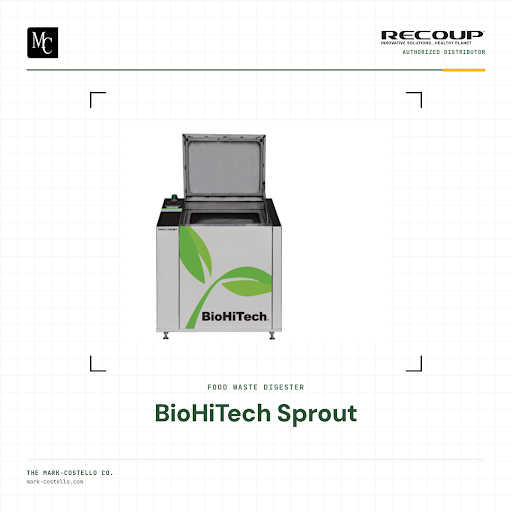
California businesses that generate food waste are operating under a very different set of rules than they were just a few years ago. State law now requires organic waste to be diverted away from landfills at a scale that many businesses were not prepared for, and the compliance pressure has only grown as enforcement has ramped up across counties and jurisdictions. For businesses trying to figure out the most practical way to meet these requirements without overhauling their entire operation, on-site food digestion has emerged as one of the more direct answers available.
A food digester tackles the organic waste problem right where it starts, breaking down food waste on site rather than requiring it to be hauled away separately as a distinct waste stream. That single shift, from off-site handling to on-site processing, changes the compliance equation for a lot of businesses that have struggled to fit organic waste diversion into their existing operations.
What a Food Digester Does
A food digester uses a biological process, typically aerobic digestion, to break down food waste into a much smaller volume of byproduct, often water and a small amount of residual material that can be safely disposed of through standard channels or, depending on the system, recovered for other uses. The process happens continuously inside the unit as food waste is added throughout the day, meaning a kitchen or food service operation can dispose of scraps, trimmings, and unsellable food directly into the digester rather than accumulating it in a separate bin for hauling.
This is a meaningfully different model compared to traditional organic waste handling, which typically involves collecting food waste in a dedicated bin, storing it until a scheduled pickup, and then hauling it to an off-site composting or processing facility. A digester compresses that entire chain into a single on-site step, converting waste at the point of generation instead of relying on a separate collection and transport process to get it where it needs to go.
Most digesters are designed to fit into the flow of a working kitchen or food service area without requiring major renovation. Staff feeds food waste directly into the unit as part of their normal cleanup routine, much the way they would scrape scraps into a standard waste bin, except that the material is processed almost immediately rather than sitting and accumulating. Over time, this becomes just another part of the kitchen workflow rather than a separate, additional task that staff has to remember to manage.
California’s Organic Waste Diversion Rules
The regulatory backdrop here is Senate Bill 1383, a state law that set ambitious targets for reducing the amount of organic waste sent to California landfills. The law requires significant reductions in organic waste disposal compared to a set baseline, and it applies broadly across businesses, multi-family properties, and the jurisdictions responsible for enforcing compliance within their boundaries. According to CalRecycle, the state agency responsible for administering the law, organic waste in landfills is a significant source of methane emissions, which is part of why the state has prioritized diverting this specific waste stream so aggressively.
The mandate covers commercial businesses that generate food waste as part of their normal operations, including restaurants, grocery stores, and institutional food service providers, along with multi-family residential properties above a certain unit threshold. Local jurisdictions are responsible for enforcing the law within their communities, which means businesses may encounter slightly different reporting and compliance procedures depending on where they operate, even though the underlying state requirement is consistent everywhere. Businesses that fall under the mandate are generally expected to arrange for organic waste collection services, participate in organic waste recycling programs, and in some cases meet specific recordkeeping or reporting requirements set by their local jurisdiction.
Enforcement has increased steadily since the law took effect, with local jurisdictions issuing notices and, in some cases, penalties to businesses that fail to establish the required organic waste diversion programs. The exact enforcement approach varies from one city or county to another, and businesses are generally encouraged to check with their local waste management authority to understand exactly what documentation and program elements are expected in their specific area. What stays consistent everywhere, though, is the underlying goal of the law: less organic material ending up in a landfill, replaced by material that is composted, digested, or otherwise diverted into a beneficial use.
Why On-Site Digestion Is a Direct Compliance Fit
The appeal of a food digester in this regulatory context comes down to how directly it addresses the core requirement of the law, which is reducing the volume of organic waste that ends up in a landfill. By processing food waste on site, a business immediately cuts the volume of organic material that would otherwise need to be collected, hauled, and disposed of as landfill-bound or composted waste. That reduction happens at the source, before any hauling company is ever involved, which simplifies a business’s overall waste management picture considerably.
On-site digestion also reduces a business’s reliance on third-party organic waste collection schedules, which can be a genuine operational headache for businesses generating large volumes of food waste on a daily basis. Instead of coordinating pickup timing around how quickly a dedicated organics bin fills up, a business running a digester handles that waste continuously as it is generated, removing one more moving part from daily operations.
There is also a recordkeeping benefit worth mentioning. Businesses operating under SB 1383 often need to demonstrate that they are meeting their diversion obligations, and a documented on-site digestion process, particularly one supported by equipment specifications and usage data, can support that kind of reporting more cleanly than trying to reconstruct diversion volumes from third-party hauling invoices after the fact.
Cost predictability is another factor businesses tend to appreciate once they make the switch. Organic waste hauling contracts often come with their own fee structures layered on top of a business’s existing general waste and recycling contracts, meaning a business could be managing three separate waste streams with three separate cost structures. Bringing organic waste processing on site through a digester simplifies that picture considerably, replacing an ongoing hauling expense with a more predictable equipment and maintenance cost that does not fluctuate based on collection frequency or regional hauling rates.
Food Digesters Compared to Traditional Organic Waste Handling
The differences between digestion and traditional organic waste collection become clearest when you look at what each approach requires on a daily basis. Traditional organic waste handling means a separate bin, separate signage and staff training to keep contamination out of that bin, a scheduled pickup, and a truck that has to visit the property specifically for that waste stream. Every one of those steps adds coordination, and every scheduled pickup that gets missed or delayed creates a window where food waste sits around generating odor and attracting pests.
A food digester removes several of those steps entirely. There is no separate bin sitting around waiting for pickup, no scheduled truck visit dedicated to organic waste, and no window of time where decomposing food waste is exposed to the surrounding environment. The processing happens continuously and immediately, which means the odor and pest issues associated with stored organic waste are dramatically reduced compared to a bin-based system.
The turnaround time difference matters too. Off-site composting, even when it works well, involves a multi-day or multi-week process before food waste is fully processed into finished compost. A digester processes waste on an ongoing basis throughout each day, meaning there is no backlog building up the way there can be with a bin waiting for its next scheduled pickup.
Space is another consideration that often gets overlooked until a business actually starts comparing options. A dedicated organics bin takes up dock or storage space that many food service operations simply do not have to spare, particularly in dense urban locations where every square foot of back-of-house space matters. A digester unit, sized appropriately for the business, can often be installed in a compact footprint near the kitchen itself, eliminating the need for a separate outdoor storage area entirely dedicated to organic waste awaiting pickup.
Best Fit Businesses for a Food Digester
Restaurants are perhaps the most obvious fit for on-site food digestion, given the steady, predictable volume of food scraps, trimmings, and unsellable food that comes with daily kitchen operations. Grocery stores dealing with spoiled produce and expired food products generate a similarly steady stream of organic waste that a digester can handle continuously rather than requiring a separate organics collection process.
Hospitals and other healthcare facilities, which often run food service operations around the clock to support patients and staff, represent another strong use case, particularly given the volume and consistency of food waste generated in these settings. Institutional kitchens more broadly, including those serving schools, universities, and corporate campuses, tend to generate the kind of large, predictable food waste volume that makes a digester investment straightforward to justify.
Multi-family residential properties with on-site food service, such as senior living communities or student housing with dining halls, round out the list of businesses where a food digester tends to make the most sense. In all of these cases, the common thread is a steady, high-volume food waste stream generated in a single location, which is exactly the scenario where on-site digestion delivers the clearest advantage over hauling waste to a separate processing facility.
Catering operations and event venues represent a slightly different but equally strong use case. These businesses often generate large, concentrated bursts of food waste tied to specific events rather than a steady daily volume, which can make traditional scheduled organics pickup difficult to align with actual need. A digester sized to handle peak event volume gives these businesses a way to process that waste on their own timeline rather than waiting on a hauling schedule that was never designed around an irregular event calendar in the first place.
What This Means for Compliance Planning
It is worth being clear that a food digester is not automatically a complete compliance solution on its own for every business. SB 1383 compliance can involve multiple components depending on a business’s specific situation, including organic waste collection arrangements, contamination monitoring, and jurisdiction-specific reporting requirements. A digester addresses the core volume reduction goal of the law directly and effectively, but businesses should still confirm the full scope of what their local jurisdiction requires to ensure every piece of the compliance picture is covered.
That said, for businesses generating significant food waste, on-site digestion represents one of the more proactive and defensible steps available, since it demonstrably reduces the amount of organic material that would otherwise require separate handling. Pairing a digester with clear documentation of its usage and capacity gives a business a strong foundation to build the rest of its compliance program around.
Businesses that are still early in their compliance planning often benefit from starting with a straightforward waste audit, looking at exactly how much food waste is generated on a typical day or week and how that waste is currently being handled. That baseline makes it much easier to have an informed conversation about whether a digester makes sense, what size unit would be appropriate, and how it would fit alongside any other organic waste diversion steps the business may already have in place.
Bringing It All Together
California’s organic waste diversion requirements are not going away, and if anything, enforcement is likely to become more consistent across jurisdictions as the law matures. Businesses that generate significant food waste need a practical, sustainable way to meet these requirements without adding unnecessary complexity to their daily operations. Food digesters offer a direct path to that goal, processing waste continuously at the source rather than requiring a separate collection and hauling chain for organic material. For restaurants, grocery stores, hospitals, and institutional kitchens generating steady volumes of food waste, on-site digestion addresses both the regulatory requirement and the everyday operational headaches that come with managing organic waste through traditional means.
How Mark Costello Can Help
Mark Costello is currently working with a vendor specializing in food digester technology, bringing this solution to clients as part of a broader effort to help California businesses manage organic waste more effectively and stay ahead of state regulatory requirements. As this partnership develops, we are focused on making sure businesses have access to the right-sized digestion solution for their specific food waste volume and operational needs, without having to piece together equipment and hauling arrangements from multiple unrelated vendors. If your business is generating significant food waste and looking for a practical way to address SB 1383 compliance, our team can talk through your current waste stream and help you understand whether an on-site digester fits your operation. Reach out to Mark Costello today to start that conversation.
Frequently Asked Questions
What is SB 1383 and who does it apply to?
Senate Bill 1383 is a California state law requiring significant reductions in the amount of organic waste sent to landfills, based on targets set against a defined baseline. It applies broadly to businesses that generate food waste, including restaurants, grocery stores, and institutional food service operations, as well as multi-family residential properties above a certain size, with local jurisdictions responsible for enforcement within their communities.
How does a food digester work?
A food digester uses a biological process, typically aerobic digestion, to break down food waste continuously as it is added to the unit. The process reduces the waste to a much smaller volume of byproduct, often primarily water, eliminating the need to collect and haul food waste separately as its own dedicated waste stream.
Is a food digester enough to meet organic waste compliance on its own?
A digester directly addresses the core requirement of reducing organic waste volume, but full SB 1383 compliance can involve additional components depending on a business’s situation, including specific reporting or documentation requirements set by the local jurisdiction. Businesses should confirm the complete scope of their local requirements to make sure every part of their compliance program is covered.
What types of businesses benefit most from a food digester?
Businesses generating a steady, high-volume food waste stream tend to see the clearest benefit, including restaurants, grocery stores, hospitals, institutional kitchens, and multi-family properties with on-site dining or food service operations. The consistency and volume of food waste in these settings makes it straightforward to size a digester correctly and justify the investment.
How much food waste can a digester handle?
Capacity varies significantly by unit size and model, and the right choice depends on a business’s actual daily food waste volume. Reviewing current waste generation patterns before selecting a unit helps ensure the digester is properly sized for the business’s real needs, rather than under- or overestimating capacity based on rough guesses.

Michael Kelleher is an experienced content strategist at The Mark-Costello Co, with over five years of expertise in creating compelling, data-driven content for diverse industries. His focus on delivering high-quality blog posts and content strategies has helped businesses elevate their online presence and connect with their target audience effectively.